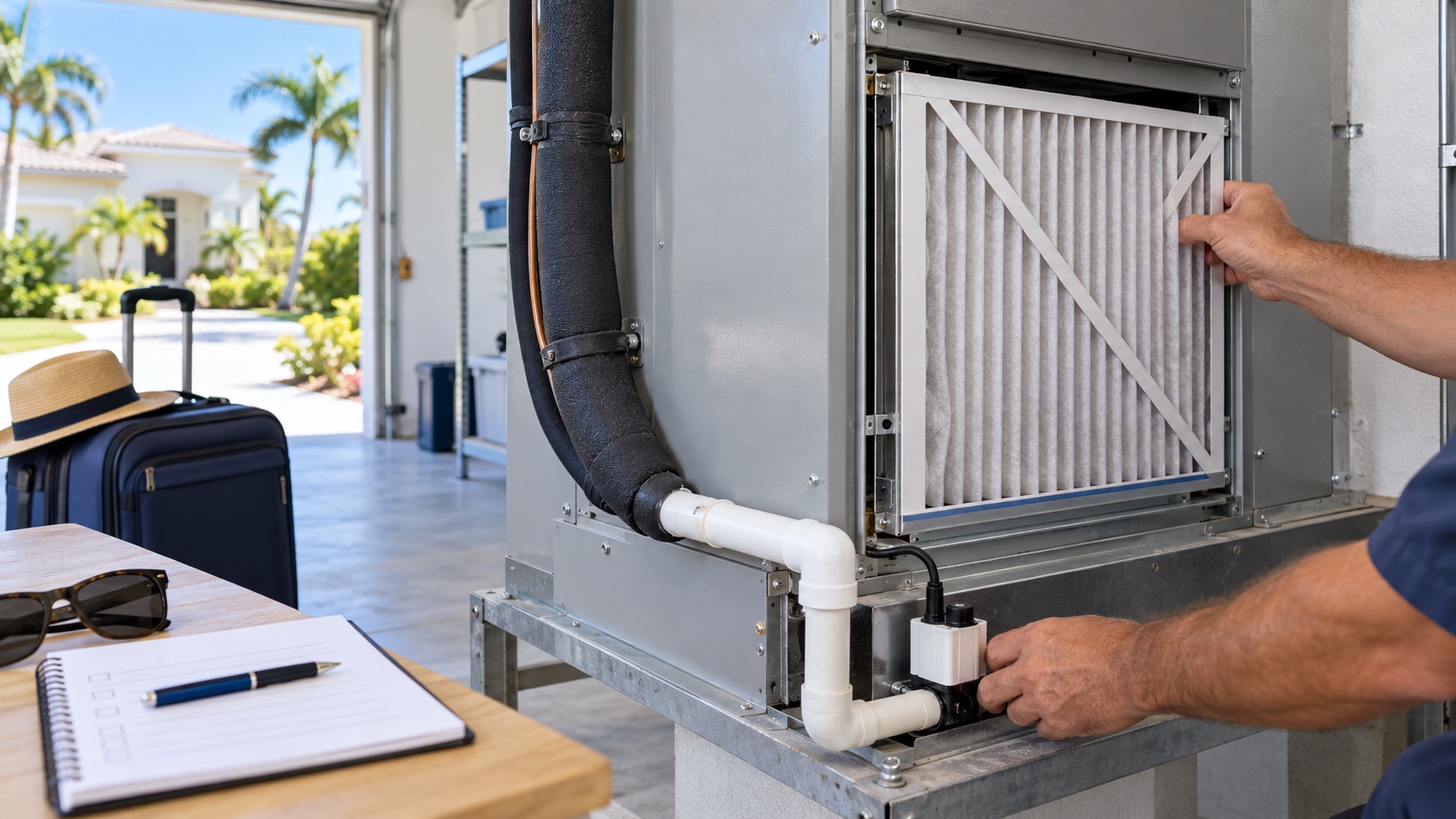
Inspect ceilings, the air-handler area, drain termination, thermostat history, filter, supply registers, and outdoor equipment. Look for water, corrosion, pest activity, damaged insulation, unusual odor, noise, or offline periods.
Lower the setpoint gradually if the home is very warm and humid, and watch drainage and runtime. Request service if temperature or humidity does not improve, water appears, breakers trip, or equipment behaves abnormally.
Use the same system as a year-round Florida maintenance calendar: verify cooling readiness before spring and summer load, monitor filters and drainage through humid months, inspect outdoor equipment and surge protection around storm periods, review heating mode before cooler weather, and use fall or mid-winter visits for issues that can be corrected before the next high-load season. Actual timing should follow equipment, occupancy, environment, and service history rather than a generic month alone.