Web Analytics

FL Lic. #CMC1250863

SEASONAL HOME AC GUIDE

Air Conditioner Maintenance Tips for Seasonal Homeowners

Before leaving a Florida home, confirm air-conditioner condition, drainage, filter service, humidity control, thermostat settings, monitoring, and a local response plan instead of turning the system off.

Updated and expanded May 2026  ·  First Degree Air Conditioning

SEASONAL AC MAINTENANCE

Seasonal Homeowners Should Prepare AC for Humidity and Unoccupied Operation

Florida heat and moisture continue after a seasonal resident leaves. A closed home still gains heat, creates condensate when cooling operates, and can develop humidity or water damage if the system, drain, power, or controls fail.

Schedule maintenance before departure when time remains to correct findings. Confirm filter condition, coil and blower cleanliness, condensate pan and drain, float safety, thermostat operation, supply and return airflow, outdoor clearances, monitoring, and who can enter the property if an alert occurs.

ARTICLE AT A GLANCE

Key Topics in This Guide

Use these links to move directly to the information you need.

SEASONAL AC ARTICLE GUIDE

Pre-Departure AC Maintenance, Thermostat, Monitoring, and Return Topics

Build a departure routine that accounts for the equipment and the property.

LEAVE TIME FOR CORRECTIONS

Pre-Departure AC Maintenance Should Verify Drainage, Airflow, and Controls

Do not schedule the final inspection on departure morning. Allow time for a drain repair, weak electrical component, failing motor, dirty coil, damaged duct, thermostat issue, or other finding to be addressed and rechecked.

Replace or document the filter, clear vegetation around the condenser, confirm panels and drain caps are secure, test float safeties, and record model numbers and service contacts. Avoid unapproved chemicals or improvised drain modifications.

AIRFLOW

Leave a Clean Correctly Sized AC Filter

Excess restriction can reduce performance; a loose or missing filter allows bypass.

DRAINAGE

Test the AC Drain and Float Safety

Unoccupied condensate trouble can damage ceilings, floors, and furnishings.

CONTROLS

Verify Thermostat Schedules and Power

Remove temporary holds and confirm remote access before leaving.

CONTROL HEAT AND MOISTURE

Vacant Florida Home AC Settings Should Balance Temperature and Humidity

There is no universal thermostat number for every vacant home. Construction, orientation, air leakage, furnishings, duct location, equipment capacity, thermostat location, and desired humidity limit all matter. Do not turn cooling off without a property-specific moisture plan.

If the thermostat supports humidity control, confirm how it operates, its limits, and whether it can overcool. Standalone dehumidifiers need correct drainage and maintenance.

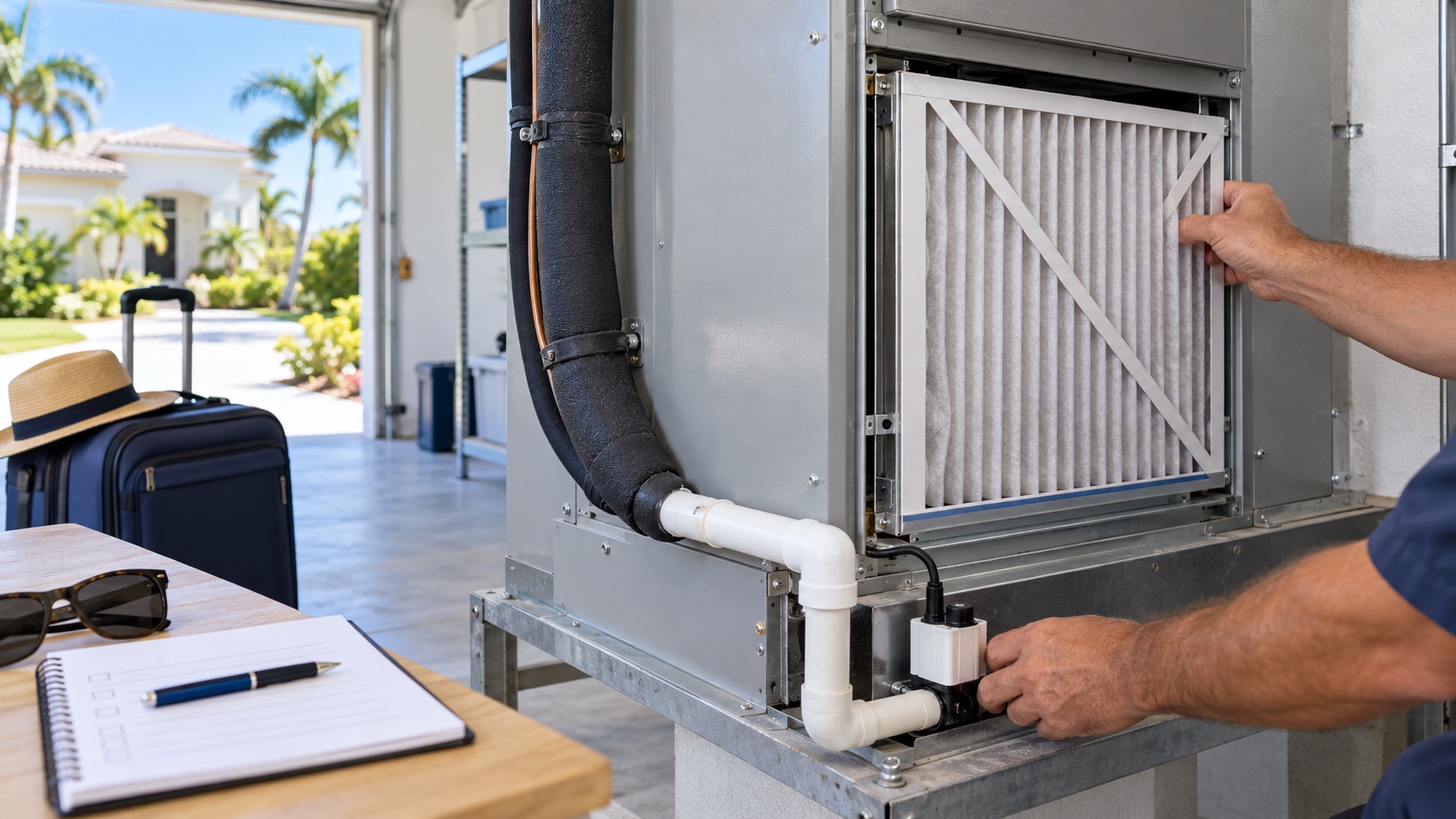
Technician hands checking a real air-handler filter and condensate safety before a seasonal homeowner leaves Florida
Seasonal-home AC planning should protect airflow, drainage, humidity control, monitoring, and emergency access while the property is unoccupied.

Seasonal AC Protection Combines Equipment Care With Monitoring

A clean filter, verified drain, working safety, tested controls, reliable alerts, and local access provide stronger protection than a thermostat setting alone.

PLAN FOR A REAL RESPONSE

Seasonal Home AC Monitoring Needs Temperature, Humidity, Water, Power, and Local Access

Remote thermostat data is useful only if internet and power remain available. Consider independent temperature, humidity, water, and power-loss alerts where appropriate, then test every notification before departure.

Give a trusted local contact or property manager written authority, keys, alarm instructions, equipment locations, and service contacts. Define when they should enter, shut water or equipment off, photograph conditions, or request service.

ALERTS

Test Seasonal Home Notifications

Confirm the correct person receives temperature, humidity, water, and offline alerts.

ACCESS

Provide Safe Equipment Access

The responder needs keys, alarm instructions, gate access, and equipment locations.

RECORDS

Keep AC and Property Details Together

Include model numbers, warranties, service history, and emergency contacts.

INSPECT BEFORE NORMAL USE

Returning Seasonal Homeowners Should Check AC Before Lowering the Thermostat

Inspect ceilings, the air-handler area, drain termination, thermostat history, filter, supply registers, and outdoor equipment. Look for water, corrosion, pest activity, damaged insulation, unusual odor, noise, or offline periods.

Lower the setpoint gradually if the home is very warm and humid, and watch drainage and runtime. Request service if temperature or humidity does not improve, water appears, breakers trip, or equipment behaves abnormally.

Use the same system as a year-round Florida maintenance calendar: verify cooling readiness before spring and summer load, monitor filters and drainage through humid months, inspect outdoor equipment and surge protection around storm periods, review heating mode before cooler weather, and use fall or mid-winter visits for issues that can be corrected before the next high-load season. Actual timing should follow equipment, occupancy, environment, and service history rather than a generic month alone.

RELATED HVAC GUIDES

Continue With Related HVAC Tips and Service Guidance

Use these related First Degree Air Conditioning resources to compare the next repair, maintenance, equipment, or operating question without leaving the topic unfinished.

SEASONAL HOME AC QUESTIONS

Seasonal Homeowner Air-Conditioner Questions

These answers address vacant-home cooling, humidity, drainage, and monitoring.

Should I turn off the AC when leaving Florida for the season?

Usually not without a property-specific heat and moisture plan. Closed homes still face heat, humidity, and indoor material risks.

What temperature should I leave a vacant Florida home?

There is no single safe number. Construction, leakage, contents, equipment, humidity control, and monitoring determine an appropriate plan.

Is a smart thermostat enough for a seasonal home?

It helps, but internet or power can fail. Water, humidity, power alerts and a local responder may also be needed.

When should seasonal homeowners schedule AC maintenance?

Before departure with enough time to repair and recheck problems—not at the last minute.

PRIMARY HVAC AND INDOOR-AIR SOURCES

Seasonal Home AC Sources Used for This Guide

Federal guidance supports maintenance, humidity control, and careful thermostat and airflow management.

ARTICLE AUTHORSHIP & TECHNICAL REVIEW

Seasonal Home AC Guide Written and Reviewed by Professionals

This article combines professional research and writing with technical review by the owner of a licensed Palm Beach County HVAC company. The editorial and contractor roles are identified separately so readers can understand how the guidance was prepared.

WRITTEN BY

Senior SEO and Content Specialist at SoFloWeb

Dana is an experienced HVAC content writer who creates clear, useful guidance grounded in careful research and reliable industry sources.

TECHNICALLY REVIEWED BY

Owner, First Degree Air Conditioning
Florida Certified Mechanical Contractor · CMC1250863

Tom reviewed the HVAC guidance for practical accuracy and consistency with real equipment service in Palm Beach County.

This article is educational and does not replace the instructions for the installed equipment or an onsite HVAC evaluation.

PALM BEACH COUNTY AC MAINTENANCE

Prepare a Seasonal Home Air Conditioner Before Departure

First Degree Air Conditioning can inspect cooling, airflow, drainage, safeties, electrical components, controls, and visible duct conditions before a Florida home is left unoccupied.