If you’re in the market to upgrade your home’s cooling system, you’re likely familiar with the traditional central air system. But, a second option that is growing in popularity is the mini split system. While both systems are known for maintaining a cool and comfortable living space, mini splits have gained a reputation for being incredibly energy-efficient. How do they compare to the tried-and-true central air conditioning systems?
Let’s look at the differences, efficiency, and main factors that can help you choose the best HVAC system.
Ductless Mini Splits vs. Central Air
You may have heard of both systems before, but what’s the difference?
Mini Split AC Systems
Mini split air conditioners are not to be confused with window air conditioners, often called “window shakers.” These systems have two main components: an outdoor compressor and indoor air handlers. They are “ductless,” meaning they don’t require ductwork to cool or heat a space. You can use one unit or multiple. They are wall—or ceiling-mounted and connected by refrigerant lines. Separate units in different rooms or spaces allow for zoned cooling, allowing you to control the temperature for each space.
Central Air Conditioning
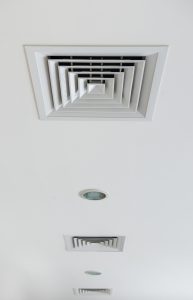
Central air has long been the gold standard in HVAC systems. One system cools (or heats) an entire house or building. Central air conditioning systems include an outdoor condenser, an indoor air handler and a series of ducts that connect to each room or space. One thermostat cools all the air to the same temperature and then distributes it throughout the home by forcing it through the ducts. Smart thermostats offer homeowners more control and functionality, but the system still provides the same temperature for all the spaces.
Key Differences Between Whole Home Systems and Mini Splits
- Ductwork: Mini splits don’t require ducts, while central air relies on them. This makes mini splits easier to install in homes without existing ductwork.
- Cooling Zones: Mini splits offer zoned cooling for specific areas, while central air completely cools the entire home.
- Energy Loss: Central air can lose up to 30% of energy through ductwork, while mini splits eliminate this issue entirely.
How Efficient Are Ductless Mini Splits?
Ductless mini-split air conditioning systems are among the most energy-efficient cooling solutions, significantly outperforming central air. They achieve high SEER (Seasonal Energy Efficiency Ratio) ratings, often exceeding 20, compared to the 15–17 SEER ratings typical of standard central air systems.
Mini-splits use electricity more efficiently than traditional central systems because they use less energy for the same cooling. The ability to cool only where it’s needed most further reduces energy consumption compared to cooling the entire house, especially in homes with underused rooms.
What Makes Mini Split ACs More Efficient Than Central Air?
Mini-splits outperform central air systems for several reasons:
- No Air Ducts: No ductwork means 100% of the cooled air is delivered directly to the space. Central air can lose up to 30% of its cooling energy through leaks or poorly insulated ducts. Ductless mini-splits avoid this issue altogether.
- Zoned Cooling: The “split” means indoor units can be installed in individual rooms like the kitchen, bedrooms, living room, etc. Each unit creates a cooling zone, allowing you to cool only used rooms. Turning the thermostat up for empty rooms saves energy compared to central air, which continues to cool the entire home, even the unoccupied spaces.
- Variable-Speed Compressors: Mini splits use inverter technology, allowing the compressor to adjust its speed to maintain consistent temperatures and consume less power. This means it can operate at minimal speeds and only ramp up to capacity when needed. Variable-speed compressors avoid central air systems’ frequent on/off cycling, reducing energy use.
- Higher SEER Ratings: Mini splits typically have higher SEER ratings, meaning they use less energy to provide the same level of cooling. Ductless systems can achieve up to 42 SEER, delivering energy savings beyond that of high SEER central air systems.
- Smart Controls: Many mini splits come with remote controls, timers, and app integration, making it easy to optimize energy use.
Should You Install a Mini-Split System?
The decision between a mini split and central air depends on your home’s setup, budget, and cooling preferences.
Choose Mini Splits If:
- You have no existing ductwork, or installing ducts would be costly or impractical, such as in older homes.
- You want energy-efficient, zoned cooling.
- You’re building a home addition, but your central air cannot effectively cool the new space.
- Your home has rooms with varying cooling needs or spaces that are often unoccupied.
- You’re prioritizing long-term energy savings over upfront installation costs.
- You have any large one-room spaces like detached garages, converted garages, studios, or workshops.
Choose Central Air If:
- Your home already has good-quality ductwork
- Larger homes that exceed the capacity of mini-splits
- You prefer a more uniform cooling solution.
- You’re on a tighter budget and need a lower initial installation cost.
- You value simplicity over the customization of zoned cooling.
- You want to integrate air-quality components like filtration systems or dehumidifiers.
Consult an HVAC Pro to Determine if a Mini Split is Right for Your Home
Ductless ACs have a clear edge over central air systems in terms of efficiency and energy savings. Their ability to eliminate ductwork energy loss, provide customized cooling zones, and offer advanced energy-saving features makes them a top choice for homeowners seeking long-term savings and flexibility.
Consult an HVAC professional if you need help determining which system is best for your home. They can help you weigh the pros and cons specific to your home and lifestyle. Having a professional evaluate your space can ensure you make a decision that keeps you (and your wallet) comfortable while still maximizing your energy efficiency.