
Web Analytics

FL Lic. #CMC1250863

FLORIDA ATTIC INSULATION GUIDE

Does Attic Insulation Keep Homes Cooler?

Attic insulation can reduce heat flow into a home, but comfort also depends on air sealing, duct condition, ventilation, humidity control, and correct HVAC performance.

Updated and expanded October 2026  ·  First Degree Air Conditioning
ATTIC INSULATION ANSWER

Attic Insulation Helps Florida Homes Stay Cooler by Slowing Heat Transfer

Yes. Insulation slows conductive heat flow between a hot attic and the conditioned rooms below. It does not create cooling, seal every air leak, repair damaged ducts, or correct an undersized or poorly performing air conditioner.

The best results come from treating the attic as a system: measure insulation depth and coverage, locate ceiling penetrations, inspect accessible ducts and boots, confirm moisture control, and evaluate HVAC runtime and airflow.

ARTICLE AT A GLANCE

Key Topics in This Guide

Use these links to move directly to the information you need.

ATTIC COOLING GUIDE

Attic Insulation, Air Sealing, Ductwork, and HVAC Performance

Use these sections to identify which attic improvement can reduce heat gain without hiding another comfort problem.

CONTROL ATTIC HEAT FLOW

Attic Insulation Performance Depends on R-Value, Coverage, and Installation Quality

R-value describes resistance to heat flow, but the labeled value assumes the material is installed at the proper depth and density. Thin areas, gaps, compression, wind washing, and displaced insulation create weak points that can affect rooms below.

Before adding material, identify roof leaks, unsafe wiring conditions, recessed fixtures, bath-fan termination, pest damage, and access needs. Covering defects can make later repairs harder.

DEPTH

Measure Attic Insulation Consistently

Check several areas because one deep location does not represent the entire attic.

COVERAGE

Correct Attic Insulation Gaps

Uniform coverage matters around framing, access hatches, and ceiling penetrations.

SAFETY

Protect Attic Service Access

Keep required clearances and equipment service areas accessible.

LOOK BEYOND INSULATION

Attic Air Leaks and HVAC Duct Problems Can Undermine Cooling Improvements

Conditioned air escaping through ceiling penetrations or leaky ducts can increase runtime and pull humid attic air toward the home. Accessible duct connections, boots, insulation jackets, supports, and the air-handler cabinet should be inspected before assuming insulation alone will solve a hot-room complaint.

Professional air sealing and duct repair should use materials suited to the application. Ordinary cloth-backed tape is not a durable substitute for approved duct-sealing methods.

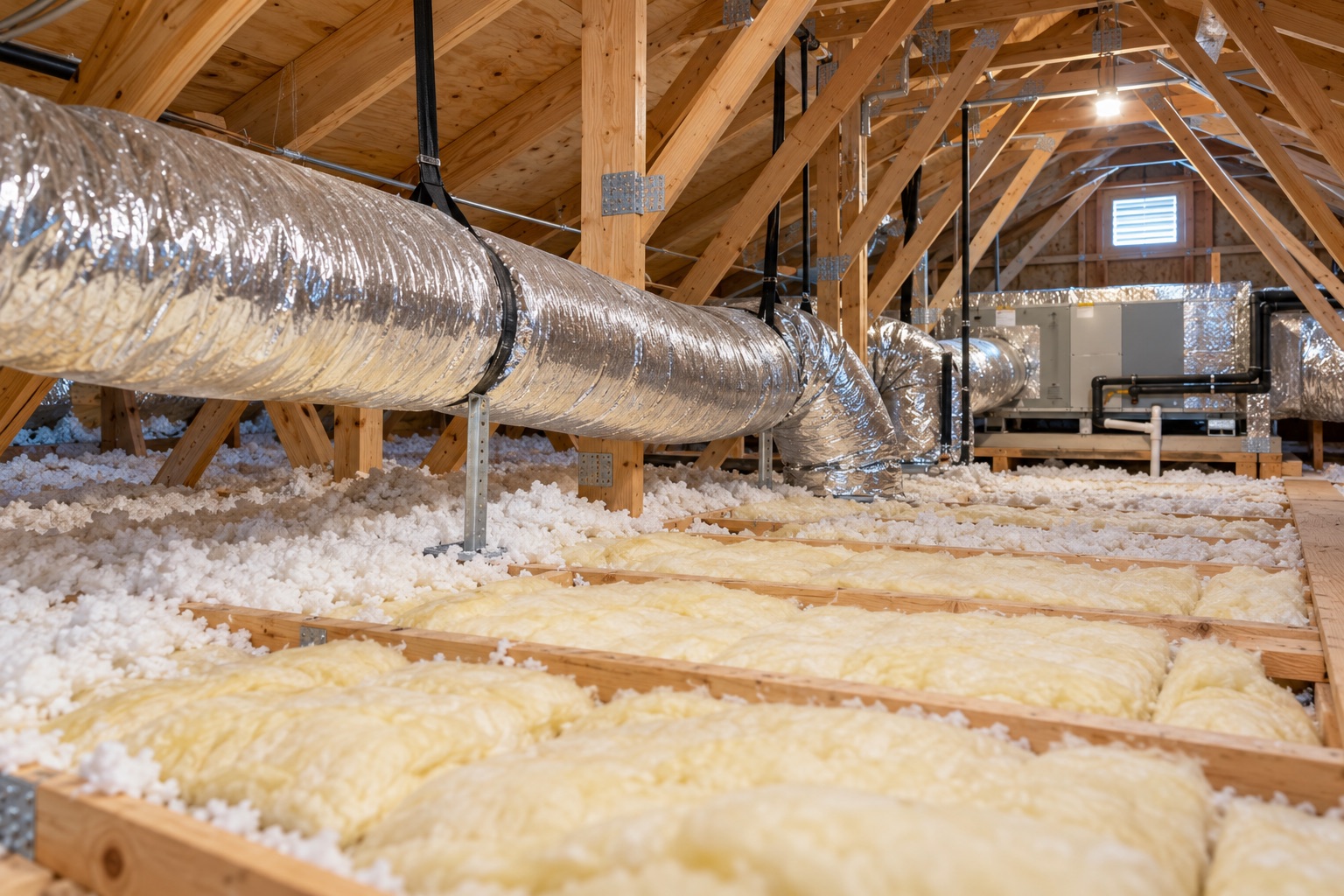
Florida attic with even insulation coverage and correctly supported insulated HVAC ductwork
Attic insulation performs best when air leaks, duct defects, ventilation, and moisture conditions are evaluated as part of the same building system.

Real Attic Cooling Improvements Protect the HVAC System

Insulation should not bury service panels, restrict access, block vents, compress ducts, or conceal leaks. A coordinated plan protects both the building envelope and the cooling equipment.

PLAN FOR SOUTH FLORIDA CONDITIONS

Florida Attic Insulation Upgrades Should Address Heat, Humidity, and HVAC Access

Palm Beach County attics experience high heat and humidity for long periods. The work plan should protect drainage, ventilation pathways, electrical components, combustion clearances where applicable, and future access to HVAC equipment.

Compare attic improvements with measured indoor temperatures, humidity, static pressure, duct condition, and equipment operation. That prevents an insulation project from being blamed for a comfort issue caused elsewhere.

ATTIC INSULATION QUESTIONS

Attic Insulation and Home Cooling Questions

These answers separate insulation benefits from problems that need HVAC or building-envelope diagnosis.

Will more attic insulation make every room the same temperature?

Not necessarily. Room loads, duct delivery, return paths, windows, air leaks, and equipment performance also affect temperature.

Can attic insulation reduce AC runtime?

It can reduce heat gain when the existing insulation is inadequate or uneven, but the result depends on the whole home and HVAC system.

Should ducts be inspected before adding insulation?

Yes. Accessible leaks, damaged jackets, poor supports, and service-clearance problems are easier to address before new insulation is installed.

PRIMARY HVAC AND INDOOR-AIR SOURCES

Attic Insulation Sources Used for This Guide

Primary guidance supports a whole-home approach to insulation and air sealing.

ARTICLE AUTHORSHIP & TECHNICAL REVIEW

Attic Insulation Guide Written and Reviewed by Local Professionals

This article combines professional research and writing with technical review by the owner of a licensed Palm Beach County HVAC company. The editorial and contractor roles are identified separately so readers can understand how the guidance was prepared.

WRITTEN BY

Senior SEO and Content Specialist at SoFloWeb

Dana is an experienced HVAC content writer who creates clear, useful guidance grounded in careful research and reliable industry sources.

TECHNICALLY REVIEWED BY

Owner, First Degree Air Conditioning
Florida Certified Mechanical Contractor · CMC1250863

Tom reviewed the HVAC guidance for practical accuracy and consistency with real equipment service in Palm Beach County.

This article is educational and does not replace the instructions for the installed equipment or an onsite HVAC evaluation.

PALM BEACH COUNTY ATTIC & HVAC SERVICE

Evaluate Attic Insulation, Ductwork, and Cooling Performance Together

First Degree Air Conditioning can inspect accessible HVAC and duct conditions and explain whether cooling performance points to insulation, airflow, equipment, or more than one issue.