
Web Analytics

FL Lic. #CMC1250863

AC REFRIGERANT DIAGNOSIS

How to Know if Your AC Needs Refrigerant

Low refrigerant can reduce cooling and freeze a coil, but airflow, controls, electrical faults, dirty coils, and compressor problems can produce similar symptoms.

Updated and expanded October 2026  ·  First Degree Air Conditioning
REFRIGERANT ANSWER

AC Refrigerant Should Be Added Only After Testing Confirms an Undercharge and the Cause

An air conditioner does not consume refrigerant during normal operation. If charge is low, the system may have a leak, an installation or service error, or an incomplete prior repair.

Common warning signs include reduced cooling, long runtime, ice, hissing, or unusual temperature differences, but none proves low charge. A licensed technician should check airflow first, then evaluate refrigerant-side measurements against the manufacturer’s charging procedure.

ARTICLE AT A GLANCE

Key Topics in This Guide

Use these links to move directly to the information you need.

REFRIGERANT GUIDE

AC Refrigerant Symptoms, Testing, Leak Repair, and Safety

Learn which symptoms justify service and why adding refrigerant without diagnosis is not a complete repair.

RECOGNIZE POSSIBLE WARNING SIGNS

Low AC Refrigerant Symptoms Can Resemble Airflow and Mechanical Problems

Warm supply air, weak cooling, long cycles, ice on the evaporator or suction line, and higher energy use can occur with low refrigerant. They can also result from a dirty filter, blocked coil, blower problem, closed registers, duct loss, control fault, or failing compressor.

Turn cooling off if the indoor coil is frozen and avoid chipping ice. Continued operation can damage equipment and prevents accurate diagnosis until the system thaws.

COOLING

Measure Supply and Return Conditions

Temperature and humidity measurements provide context but do not confirm charge by themselves.

AIRFLOW

Check Filters and Blower Operation

Refrigerant testing is unreliable when airflow is outside the required range.

ICE

Allow Frozen AC Coils to Thaw

Ice is a symptom that needs diagnosis, not proof that refrigerant should be added.

USE MANUFACTURER CHARGING DATA

Professional AC Refrigerant Testing Uses Airflow, Pressures, Temperatures, and Charging Targets

A technician identifies the refrigerant, equipment combination, metering device, outdoor conditions, and required airflow. Depending on the system, charging evaluation may use superheat, subcooling, weigh-in procedures, temperature split, saturation temperatures, and manufacturer charts.

Pressure alone can be misleading. The system must be operating under suitable conditions, and instruments, hoses, recovery equipment, and refrigerant handling must match the refrigerant and safety requirements.

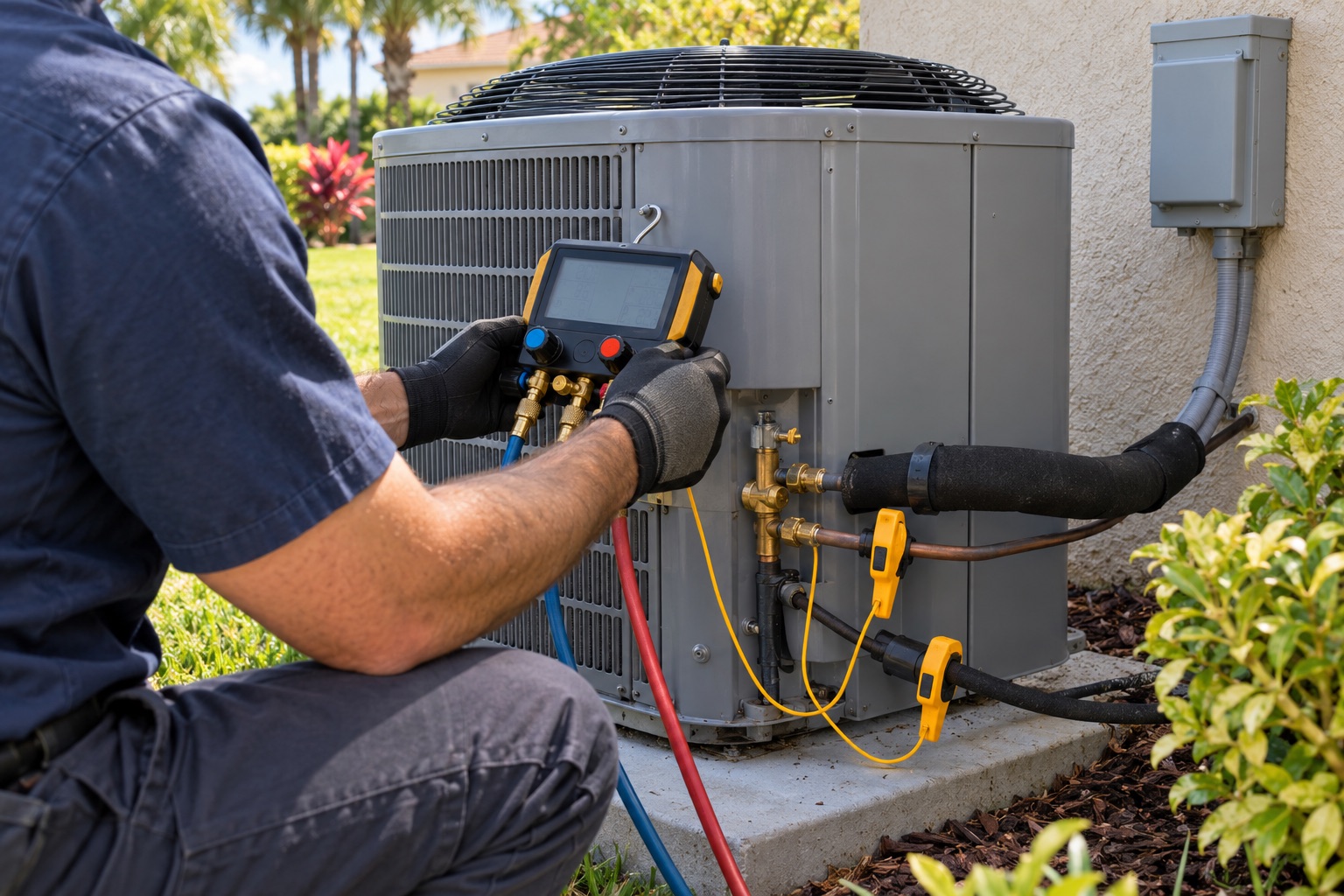
HVAC technician hands using a digital manifold to diagnose a real residential split-system condenser
Refrigerant charge is diagnosed with system measurements and manufacturer data, not by pressure alone or by automatically adding refrigerant.

Real Refrigerant Diagnosis Requires More Than Connecting Gauges

Digital instruments can help, but reliable conclusions still depend on airflow, equipment data, operating conditions, leak evaluation, and the correct charging method.

REPAIR THE CAUSE

AC Refrigerant Leak Repair Should Consider Location, Equipment Condition, and Repair Value

If a leak is suspected, the next step is locating and evaluating it. Repairability depends on the component, access, corrosion, coil condition, refrigerant, parts, age, warranty, and overall system health.

Ask for the measured findings, proposed repair, refrigerant quantity, warranty, and comparison with replacement when the failed component is costly or the system has multiple problems.

RELATED HVAC GUIDES

Continue With Related HVAC Tips and Service Guidance

Use these related First Degree Air Conditioning resources to compare the next repair, maintenance, equipment, or operating question without leaving the topic unfinished.

AC REFRIGERANT QUESTIONS

AC Refrigerant Diagnosis Questions

These answers avoid treating every cooling complaint as a refrigerant problem.

Does an AC need refrigerant every year?

No. A sealed system should not need routine topping off. Recurring low charge indicates a leak or unresolved service issue.

Can I tell refrigerant charge from one pressure reading?

No. Pressure changes with operating conditions, airflow, refrigerant type, and system design.

Should a technician repair the leak before adding refrigerant?

The leak should be located and the repair options explained. The appropriate sequence depends on the equipment and applicable requirements.

PRIMARY HVAC AND INDOOR-AIR SOURCES

AC Refrigerant Sources Used for This Guide

Federal guidance and manufacturer procedures govern refrigerant handling and system charging.

ARTICLE AUTHORSHIP & TECHNICAL REVIEW

AC Refrigerant Guide Written and Reviewed by Local Professionals

This article combines professional research and writing with technical review by the owner of a licensed Palm Beach County HVAC company. The editorial and contractor roles are identified separately so readers can understand how the guidance was prepared.

WRITTEN BY

Senior SEO and Content Specialist at SoFloWeb

Dana is an experienced HVAC content writer who creates clear, useful guidance grounded in careful research and reliable industry sources.

TECHNICALLY REVIEWED BY

Owner, First Degree Air Conditioning
Florida Certified Mechanical Contractor · CMC1250863

Tom reviewed the HVAC guidance for practical accuracy and consistency with real equipment service in Palm Beach County.

This article is educational and does not replace the instructions for the installed equipment or an onsite HVAC evaluation.

PALM BEACH COUNTY AC DIAGNOSIS

Schedule AC Refrigerant and Cooling-System Diagnosis

First Degree Air Conditioning can measure airflow and refrigerant performance, identify likely causes, and explain repair or replacement options for the installed system.