
FL Lic. #CMC1250863
Pool heater maintenance supports reliable seasonal operation by checking the installed equipment, water-flow conditions, accessible components, controls, connections, and the signs that warrant repair.
Maintenance should match the heater type and manufacturer instructions. A pool heat pump and a gas pool heater have different components and service needs, but both depend on suitable water flow, safe access, clear surroundings, correct controls, and operating conditions that allow meaningful testing.
The heater model, serial number, pool-pump schedule, recent fault messages, and changes to the pool system help establish the right testing path.
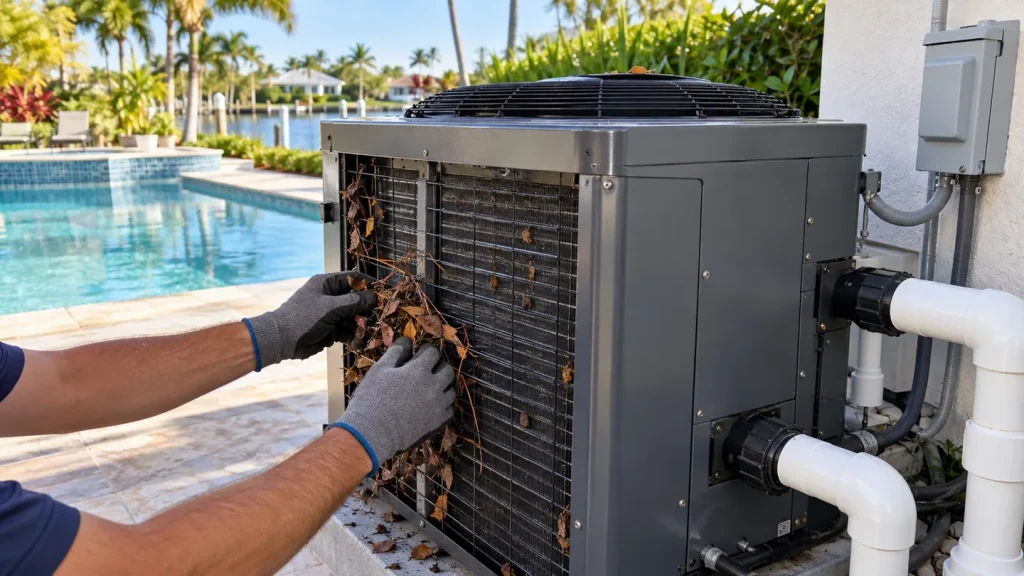
The service recommendation follows the identified equipment, measured conditions, and practical needs of the pool and property.
Identify the heater type, brand, model, serial number, controls, connected equipment, and installation details before selecting a service path.
Review pump operation, filtration, valves, bypass arrangements, flow switches, water movement, and restrictions that can affect heater operation.
Follow the requirements for the installed heat pump or gas heater when checking power, connections, ignition, fuel supply, safeties, and operating response.
Confirm temperature settings, automation, timers, sensors, control messages, and communication with connected pool equipment.
Compare the confirmed fault, parts, age, condition, repair scope, pool use, installation, and complete replacement requirements.
Check the operation relevant to the completed work and explain expected heating, settings, maintenance, and unresolved pool-system conditions.
Review the heater type, model, fault history, pool-pump schedule, recent changes, installation, and the conditions connected to the complaint.
Test the heater and relevant circulation, control, electrical, or fuel conditions so confirmed findings can be separated from assumptions.
Review the proposed work, compatible parts or equipment, expected operation, owner care, and any condition that remains unresolved.
Ask what was tested, which condition was confirmed, how it affects operation, what the proposed work includes, and whether the connected pool system requires additional attention. Age, a fault code, or a familiar symptom should not replace diagnosis.
Request the observed condition and relevant test results. Ask whether circulation, controls, sensors, electrical or fuel components, installation, or another pool-system condition contributed.
Review compatible parts or equipment, written scope, maintenance needs, warranty terms, expected operation, and any pool-system condition that remains unresolved.
Call First Degree to describe the pool-heater problem and arrange equipment-specific service.
Tell us the equipment brand, model, symptoms, and property location.
First Degree serves Pool Heater Maintenance throughout Palm Beach County. Recommendations account for the installed equipment, access, operating history, system conditions, and measured performance.
Share the property address, equipment model when available, symptoms, and access details when scheduling. Related support is available through our residential HVAC services and commercial HVAC services.
These answers provide planning guidance. The correct recommendation depends on the installed equipment, pool-system conditions, service history, and measured performance.
Water-flow problems, settings, controls, sensors, power or fuel conditions, environmental limits, or an equipment fault may contribute. Testing should identify the cause.
No. A code directs troubleshooting, but testing should confirm the connected condition before a component or complete heater is replaced.
The heater depends on appropriate circulation. Filter condition, valves, pump operation, bypass settings, and restrictions can change heater performance.
Compare replacement when repair scope, parts, age, condition, efficiency, pool use, or installation requirements make continued repair less practical.
Provide the brand, model, serial number, heater type, fault message, symptoms, pool-pump schedule, recent pool work, and clear equipment access.
First Degree evaluates compatible residential and commercial pool-heating equipment. Share the property type, equipment location, pool use, schedule, and access requirements.