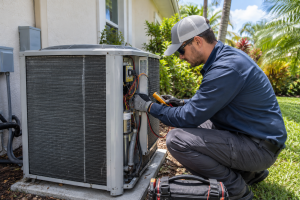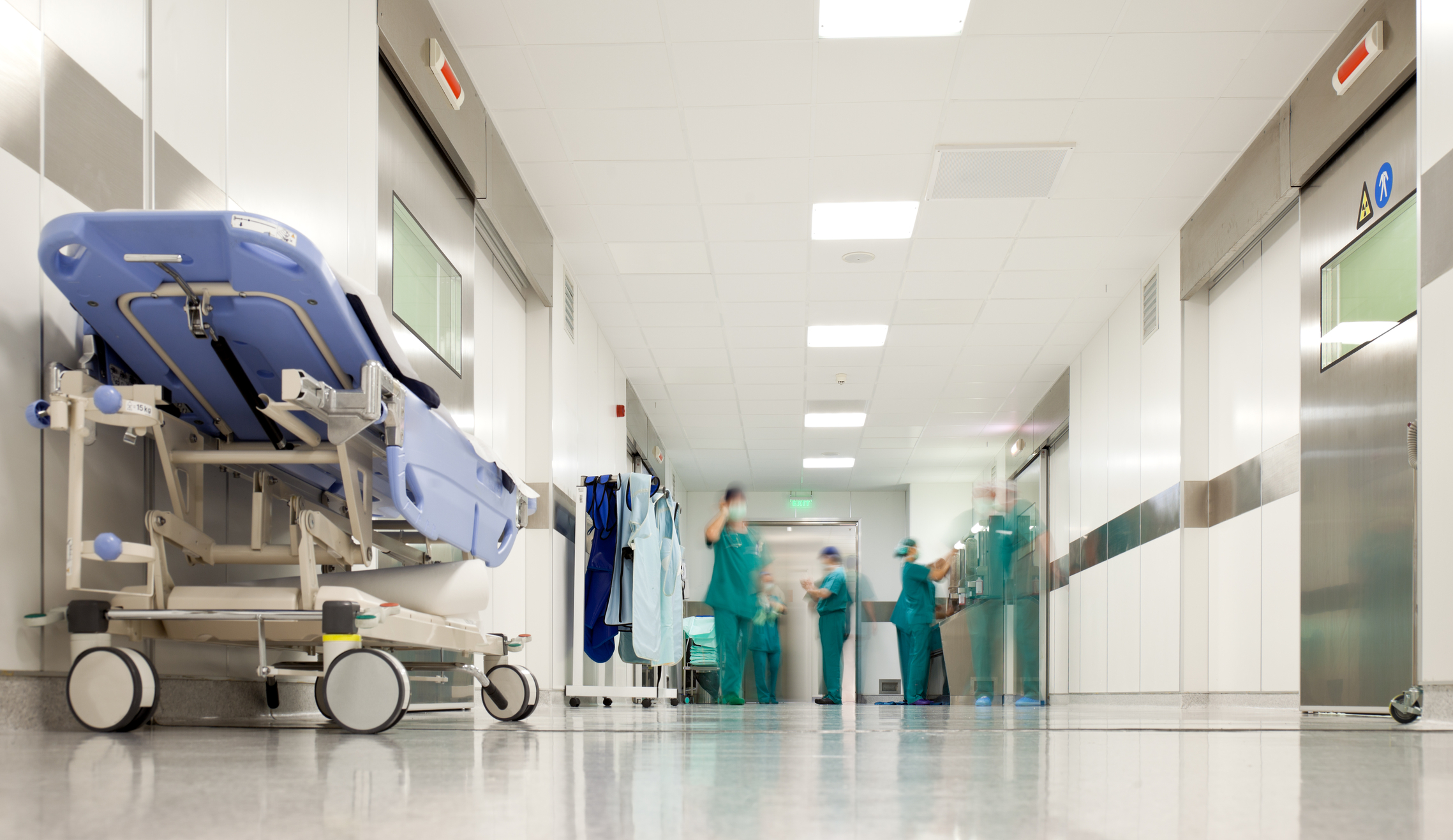
Hospitals, medical facilities, and healthcare environments face unique challenges in infection prevention. With strict hygiene standards and vulnerable patient populations, every part of the building plays a role, including the HVAC system. In healthcare settings, HVAC systems do far more than control temperature. They are a key part of environmental infection control strategies designed to support patient safety and overall well-being. [1] When designed and maintained correctly, these systems help protect patients, staff, and visitors alike.
Airborne transmission of pathogens is a well-documented concern in healthcare environments, especially in high-acuity areas such as operating rooms, isolation rooms, intensive care units, and emergency departments.[2] Alongside strict cleaning protocols, healthcare facilities rely on specialized HVAC systems to help limit the movement and concentration of airborne contaminants throughout the building.
Healthcare HVAC Systems and Airborne Infection Risk
Environmental conditions, including ventilation effectiveness and airflow control, influence healthcare-associated infections (HAIs).[2] HVAC systems in medical facilities are vital for reducing infection risk by managing air supply, circulation, filtration, and exhaust.[3]
Inadequate ventilation or improper airflow can allow contaminated air to move from higher-risk areas into patient rooms, corridors, or shared spaces.[1] Reliable HVAC performance is crucial for creating a safe and comfortable healthcare environment. When temperatures are stable and air quality is pristine, patients and staff can focus on health and healing.
Airflow Direction and Pressure Control in Hospitals and Medical Facilities
Unlike conventional commercial buildings, healthcare facilities require precise airflow management to support infection control.[3] HVAC systems are designed to maintain specific pressure relationships that prevent the spread of contaminants and protect vulnerable patient populations, particularly in controlled environments such as operating rooms, isolation areas, and cleanrooms.
Negative-pressure rooms isolate airborne pathogens, while positive-pressure environments help prevent contaminated air from entering sensitive spaces such as operating rooms, protective isolation areas, and other highly controlled healthcare environments.[4]
Indoor Air Filtration as a Core Infection Control Measure for the Medical Industry
Air filtration is one of the most effective HVAC-based strategies for reducing airborne contaminants in healthcare facilities.[5] High-efficiency filters, including HEPA or high-MERV-rated filters, are commonly used to capture bacteria, fungal spores, and other microscopic particles.[3]
Effective filtration depends not only on filter selection but also on proper installation, regular replacement, and system integrity.[5] When filters are bypassed or overloaded, system effectiveness can be reduced, allowing contaminants to circulate unknowingly throughout healthcare spaces.[2]
Humidity Control and Environmental Stability in Healthcare Facilities
Humidity levels play an essential role in both pathogen survival and patient comfort.[4] Research shows that many viruses and bacteria survive longer in environments that are excessively dry or overly humid.[2]
Hospital HVAC systems are designed to maintain indoor relative humidity within controlled ranges, typically 40%-60%, to support infection prevention and respiratory health.[1] Poor humidity control can undermine even well-designed ventilation and filtration strategies.[4]
Medical Industry Ventilation Rates and Air Exchange
Ventilation rates determine how frequently indoor air is replaced with fresh or treated air, helping dilute airborne contaminants.[3] Higher air exchange rates are required in many healthcare areas to reduce pathogen concentration and support infection control protocols.[2]
Different spaces within healthcare facilities have different ventilation requirements, making system design, balancing, and verification essential [5]. Inadequate ventilation can increase the risk of airborne exposure, particularly in high-traffic or high-acuity (critical care/ICU) environments.[1]
Medical Use UV Lights and Supplemental Air Treatment
Many hospitals and medical facilities use ultraviolet germicidal irradiation (UVGI) as a supplemental HVAC infection-control measure.[5] UV lights installed within air handlers or duct systems can help inactivate microorganisms as air passes through the system.[3]
Germicidal UV systems are not a replacement for proper ventilation or filtration, but they do provide an added layer of protection by reducing microbial growth on HVAC components and improving overall indoor air quality.[4]
The Importance of Ongoing Hospital HVAC System Maintenance
Even well-designed HVAC systems can become ineffective if they are not properly maintained.[1] Routine inspections, filter changes, system balancing, and performance verification help ensure that HVAC systems continue to meet healthcare environmental standards.[5] Proactive HVAC maintenance supports infection prevention goals, protects patient environments, and helps ensure consistent system performance across all care areas.[4]
Hospital HVAC systems support more than comfort. Routine performance inspections and maintenance ensure ventilation, filtration, and airflow controls continue to support infection prevention standards.
Hospital HVAC Systems
HVAC systems are a foundational component of infection prevention in hospitals and healthcare environments.[2] When properly designed, operated, and maintained, they help reduce airborne transmission risks and support safer patient care environments.[3]
For healthcare organizations, understanding how HVAC performance supports infection prevention can help inform system evaluations, maintenance planning, and long-term infrastructure decisions.
Resources:
- Leach R. Ventilation and the Risk of Healthcare-Associated Infections. Infection Control Today [Internet]. Published October 02, 2023;27:7. Accessed January 14, 2026. Available from: https://www.infectioncontroltoday.com/view/ventilation-risk-health-care-associated-infections
- Saran S, Gurjar M, Baronia A, et al. Heating, ventilation and air conditioning (HVAC) in intensive care units. Crit Care [Internet]. 2020;24(1):194. Published 2020 May 6. doi:10.1186/s13054-020-02907-5Accessed January 14, 2026. Available from: https://pmc.ncbi.nlm.nih.gov/articles/PMC7201115/
- Hospital Air Filtration/HVAC Systems for Effective Infection Control. Air Innovations [Internet]. Accessed January 14, 2026. Available from: https://airinnovations.com/industries/hospital-air-filtration-infection-control/
- Ting Wu H, Shuang Li Q, Chen Dai R, et al. Effects of air-conditioning systems in the public areas of hospitals: A scoping review. Epidemiol Infect [Internet]. 2021;149:e201. Published 2021 Aug 27. doi:10.1017/S0950268821001990 Accessed January 14, 2026. Available from: https://pmc.ncbi.nlm.nih.gov/articles/PMC8438419/
- HVAC Infection Control Methods: Technologies That Work. Schnackel Engineers [Internet]. Published September 25, 2025. Accessed January 14, 2026. Available from: https://schnackel.com/blogs/hvac-infection-control-methods-technologies-that-work