
FL Lic. #CMC1250863
A good SEER2 rating is one that meets current requirements and makes sense for the home’s load, usage, humidity control, matched equipment, installation, energy rates, and ownership plans.
Updated and expanded August 2026 · First Degree Air Conditioning
SEER2 is a laboratory-based seasonal cooling-efficiency metric. A higher number indicates less electricity for the same standardized cooling output, but it does not predict a specific bill or correct oversizing, duct leakage, poor airflow, wrong refrigerant charge, weak controls, or installation defects.
Compare certified matched indoor and outdoor combinations, capacity at design conditions, sensible and latent performance, compressor staging, fan energy, sound, warranties, maintenance, incentives, installed cost, and estimated use.
Use these links to move directly to the information you need.
Choose efficiency after load, equipment match, humidity, and installation requirements are defined.
SEER2 is calculated from seasonal cooling output divided by electrical energy under a prescribed test procedure with updated external static-pressure assumptions. It helps compare certified combinations but is not a promise of household savings.
Actual use depends on weather, thermostat settings, occupancy, envelope, ducts, maintenance, humidity, cycling, controls, utility rates, and installation. Compare like equipment categories and complete matched systems.
Outdoor-unit marketing alone may not describe the installed combination.
Efficiency cannot compensate for incorrect sizing or poor distribution.
South Florida comfort depends on moisture removal as well as temperature.
Federal minimums and test procedures change over time and differ for split systems, packaged equipment, heat pumps, capacity ranges, and regions. Ask the contractor to identify the applicable current requirement for the exact project.
Do not rely on an older SEER number as though it were directly interchangeable with SEER2. Use current certified data and product documentation.
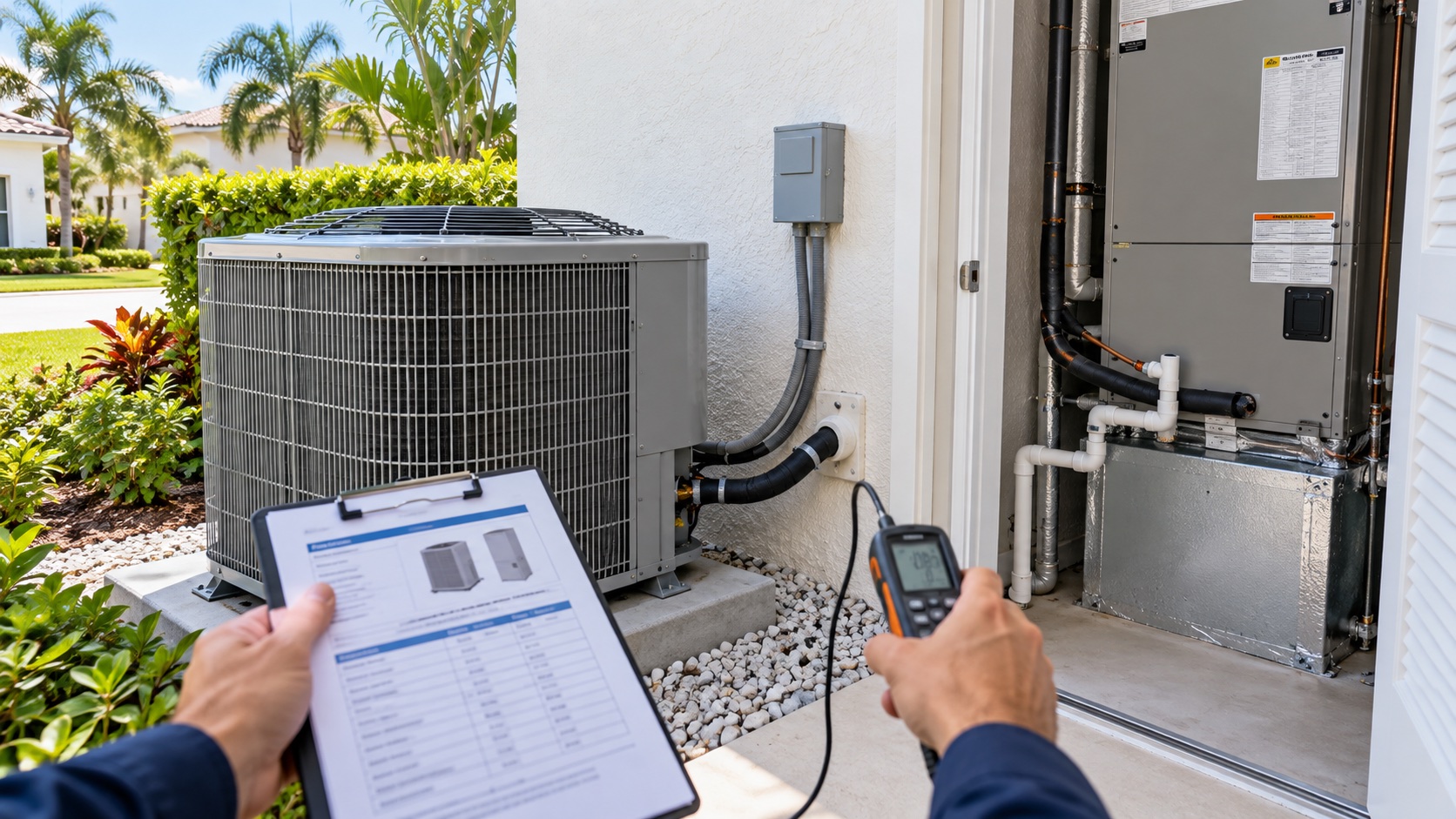
Load, equipment match, ducts, airflow, humidity, controls, commissioning, cost, and expected use determine whether a rating delivers value.
The condenser or heat pump, indoor coil, air handler or furnace, metering device, blower setup, and controls work as a system. The certified combination should match the proposed model numbers and capacity.
Installation still determines field performance. Verify load calculations, ducts, airflow, line set, electrical service, drainage, refrigerant procedures, controls, startup measurements, and commissioning records.
The indoor coil and blower affect rating, capacity, and humidity performance.
High-rated equipment cannot deliver efficiency through defective distribution.
Document airflow, temperatures, charge method, controls, drainage, and operation.
Estimate savings from the home’s actual cooling use, local rates, equipment performance, and project assumptions. Then compare the efficiency premium, rebates or credits, maintenance, warranties, financing, repair complexity, comfort features, and planned ownership period.
A moderately rated, correctly sized and commissioned system can outperform a higher-rated system installed with poor ducts or setup. Ask for written assumptions rather than a generic percentage claim.
Use these related First Degree Air Conditioning resources to compare the next repair, maintenance, equipment, or operating question without leaving the topic unfinished.
These answers clarify ratings, savings, matching, and Florida performance.
It is more efficient under the test procedure, but value also depends on installed cost, use, sizing, ducts, humidity, controls, and installation.
No. SEER2 uses an updated federal test procedure, so older SEER values should not be treated as directly equivalent.
Usually not reliably. Certified ratings depend on the matched indoor coil, blower, and other configuration details.
No. It can reduce cooling electricity under comparable conditions, but weather, rates, settings, ducts, maintenance, and installation affect bills.
Federal and certification resources explain SEER2 test procedures, efficiency standards, and matched-system ratings.
This article combines professional research and writing with technical review by the owner of a licensed Palm Beach County HVAC company. The editorial and contractor roles are identified separately so readers can understand how the guidance was prepared.
Senior SEO and Content Specialist at SoFloWeb
Dana is an experienced HVAC content writer who creates clear, useful guidance grounded in careful research and reliable industry sources.
Owner, First Degree Air Conditioning
Florida Certified Mechanical Contractor · CMC1250863
Tom reviewed the HVAC guidance for practical accuracy and consistency with real equipment service in Palm Beach County.
This article is educational and does not replace the instructions for the installed equipment or an onsite HVAC evaluation.
First Degree Air Conditioning can evaluate home load, equipment matching, ducts, airflow, humidity, controls, electrical, drainage, and commissioning needs for replacement planning.