
FL Lic. #CMC1250863
Central split systems are a familiar choice in Florida homes, while the best configuration for a specific property depends on loads, ducts, humidity control, electrical service, and the building itself.
Updated and expanded February 2026 · First Degree Air Conditioning
A central split system divides the refrigeration circuit between an outdoor unit and an indoor coil or air handler. A ducted blower distributes conditioned air through the home. Florida homes commonly use either a straight-cool air conditioner with another heat source or an air-source heat pump that reverses operation for heating.
There is no single system that is automatically right for every Florida property. Condominiums, older houses, additions, coastal homes, and buildings without usable ducts may require packaged, ductless, water-source, or specialized equipment. Select the system through load calculations, duct and airflow evaluation, moisture-control needs, code, and exact matched-equipment data.
Use these links to move directly to the information you need.
Compare the familiar central split configuration with other Florida HVAC options and the design work that determines comfort.
The outdoor unit contains the compressor, outdoor coil, fan, and controls. The indoor air handler contains the evaporator coil and blower, often with electric heat. Refrigerant lines connect the two units, while the duct system moves air through supplies and returns.
The components must be an approved match. Capacity, refrigerant, coil, metering device, blower settings, controls, line-set requirements, and efficiency rating apply to the complete combination—not to the outdoor cabinet alone.
Clear airflow, sound electrical service, a level secured base, drainage, and corrosion protection support operation.
Coil temperature, airflow, condensate drainage, filter fit, and cabinet sealing affect moisture removal.
Duct sizing, leakage, insulation, return capacity, and room-by-room balancing influence real comfort.
In cooling mode, both systems move indoor heat outdoors. A heat pump adds a reversing valve and controls so the refrigeration cycle can provide heating. Straight-cool systems may pair with electric resistance heat or another approved heating method.
Florida’s mild winter conditions can make heat pumps a practical option, but fuel availability, equipment cost, electrical capacity, controls, backup heat, comfort expectations, and the exact building still matter. Compare complete systems rather than choosing from a label alone.
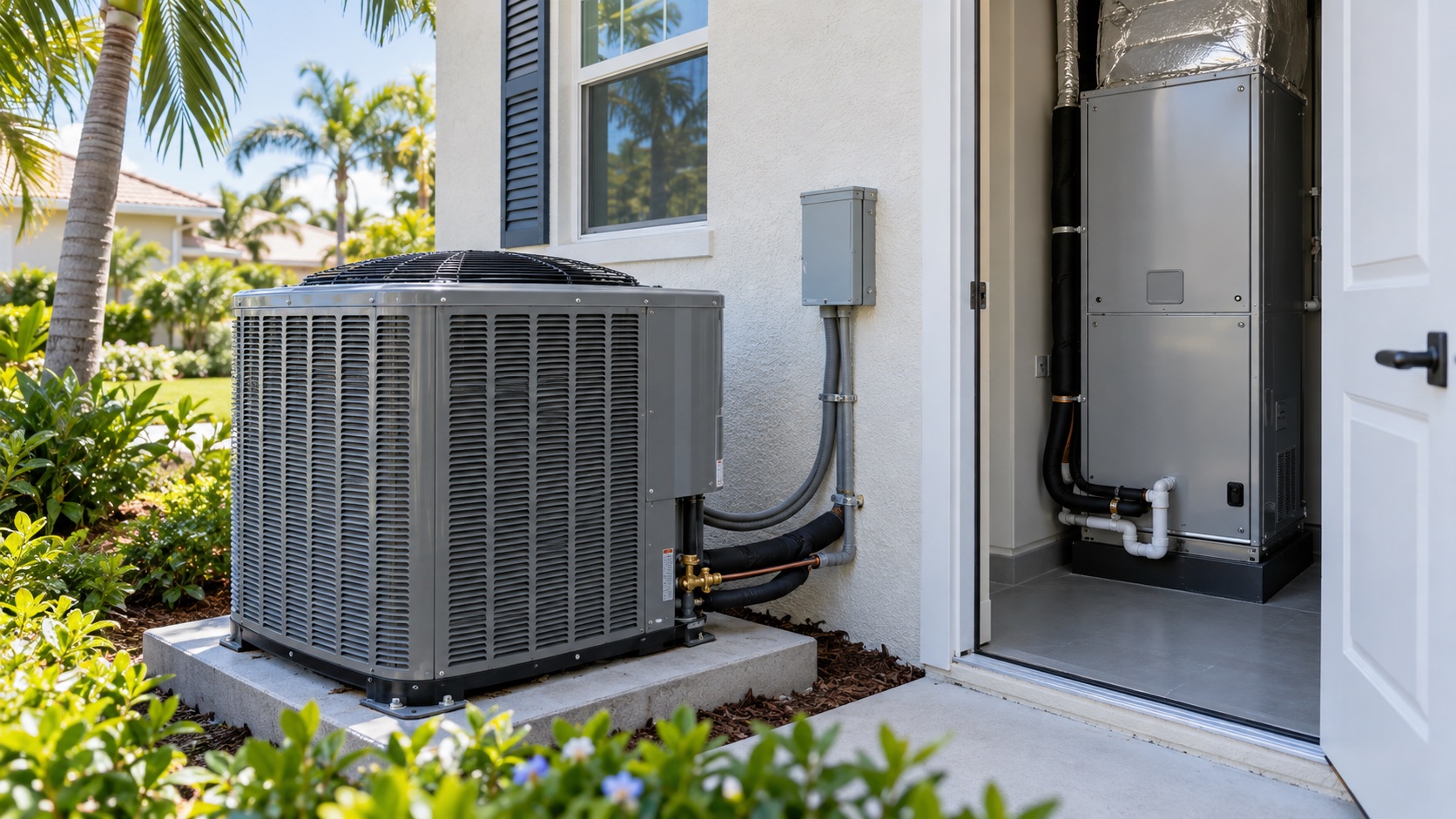
The outdoor unit, indoor air handler, refrigerant circuit, controls, condensate system, and ducts must work together. Accurate selection and commissioning matter more than choosing the most familiar cabinet.
Ductless mini-splits can condition additions, rooms without ducts, or zoned areas. Packaged units combine major components in one cabinet and may suit certain rooftops or manufactured homes. Water-source heat pumps are common in some multifamily and commercial buildings with a shared loop.
Each option changes service access, drainage, electrical work, ventilation, filtration, sound, condensate routing, and maintenance. A product’s popularity should not override building-specific engineering.
Wall, ceiling, or concealed indoor units require correct sizing and condensate management.
Roof or ground locations require suitable curb, duct, drainage, weather, and service planning.
The unit, loop conditions, controls, ownership responsibilities, and access all affect service.
A Manual J load calculation estimates heating and cooling needs using orientation, windows, insulation, infiltration, occupancy, and design weather. Equipment selection and duct design then translate that load into capacity, airflow, sensible cooling, and moisture removal.
Before replacement, document comfort complaints, room temperatures, humidity, duct leakage, return-air limitations, drainage, electrical conditions, and past repairs. Commission the installed system by measuring airflow, refrigerant performance, temperature change, drainage, controls, and static pressure.
Use these related First Degree Air Conditioning resources to compare the next repair, maintenance, equipment, or operating question without leaving the topic unfinished.
These answers explain system configurations without treating one option as universal.
Central split air conditioners and heat pumps are familiar Florida residential configurations, but building type and existing infrastructure affect what is appropriate.
Both cool with a refrigeration cycle. A heat pump can reverse the cycle to provide heating; a straight-cool air conditioner cannot.
They can work well for suitable zones, additions, or buildings without ducts when capacity, condensate, controls, filtration, and installation are planned correctly.
Use a building load calculation and evaluate ducts, airflow, moisture removal, electrical service, ventilation, and the exact matched equipment.
Federal guidance describes central system configurations, ratings, and installation fundamentals.
This article combines professional research and writing with technical review by the owner of a licensed Palm Beach County HVAC company. The editorial and contractor roles are identified separately so readers can understand how the guidance was prepared.
Senior SEO and Content Specialist at SoFloWeb
Dana is an experienced HVAC content writer who creates clear, useful guidance grounded in careful research and reliable industry sources.
Owner, First Degree Air Conditioning
Florida Certified Mechanical Contractor · CMC1250863
Tom reviewed the HVAC guidance for practical accuracy and consistency with real equipment service in Palm Beach County.
This article is educational and does not replace the instructions for the installed equipment or an onsite HVAC evaluation.
First Degree Air Conditioning can evaluate loads, ducts, airflow, humidity, electrical conditions, and matched equipment before recommending replacement options.