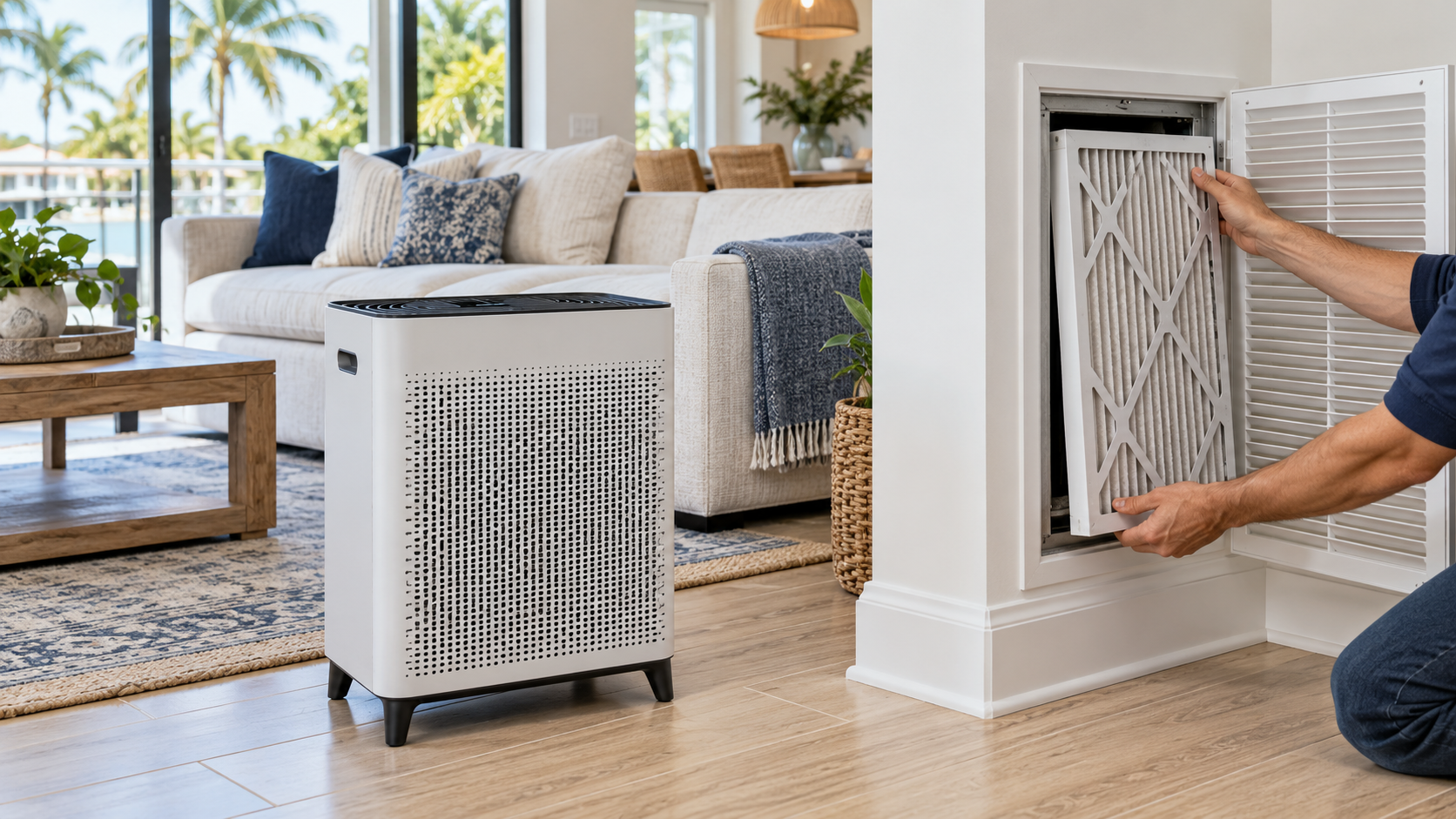
Define the concern first: particles, gases, odors, damp HVAC surfaces, or a combination. Then document the room size or central-system design, existing filter dimensions, blower capability, available electrical supply, service access, replacement parts, noise expectations, and ongoing cost.
Compare rated performance rather than broad marketing language. Look for particle CADR on portable units, recognized filter ratings, clear replacement intervals, published electrical and ozone information, and installation instructions that match the intended application. For in-duct equipment, an HVAC inspection can prevent an accessory from restricting airflow or conflicting with the equipment.