FL Lic. #CMC1250863
Replacing only the evaporator coil can make sense when the rest of the AC system is compatible and healthy; complete replacement deserves comparison when age, refrigerant, condition, matching, warranty, or repair risk makes a coil-only project poor value.
Updated and expanded April 2026 · First Degree Air Conditioning
First confirm why the coil is being considered. Leaks, corrosion, restriction, impact damage, frozen-coil damage, contaminated refrigerant circuits, and drain-pan failure lead to different scopes. Dye or electronic indications should be supported by a qualified leak-location process.
Then compare a compatible replacement coil with complete matched-system replacement. Include labor, refrigerant, metering device, line-set condition, access, drain work, permits, efficiency, capacity, warranty, remaining component life, and the probability of another major repair.
Use these links to move directly to the information you need.
Use the complete system condition rather than one failed component to make the decision.
A low refrigerant charge does not prove the indoor coil leaks. Inspect the indoor and outdoor coils, fittings, line set, service valves, and accessible joints using appropriate methods. A dirty coil, low airflow, failed blower, or control problem can mimic refrigerant trouble.
Document the leak or failure location, coil and pan condition, equipment model and serial numbers, refrigerant type, warranty status, and contamination concerns before pricing the project.
Avoid replacing an evaporator coil for an unconfirmed system leak.
Filters, blowers, ducts, controls, and refrigerant conditions can create ice.
A damaged pan or cabinet may change the repair scope.
The coil is part of a rated combination with the condenser or heat pump and blower. Confirm capacity, refrigerant, design pressure, expansion device, cabinet orientation, airflow, drain configuration, and certification or manufacturer compatibility.
An available coil that physically fits is not automatically an appropriate match. Mixing incompatible equipment can affect capacity, efficiency, humidity removal, controls, warranty, and compressor life.
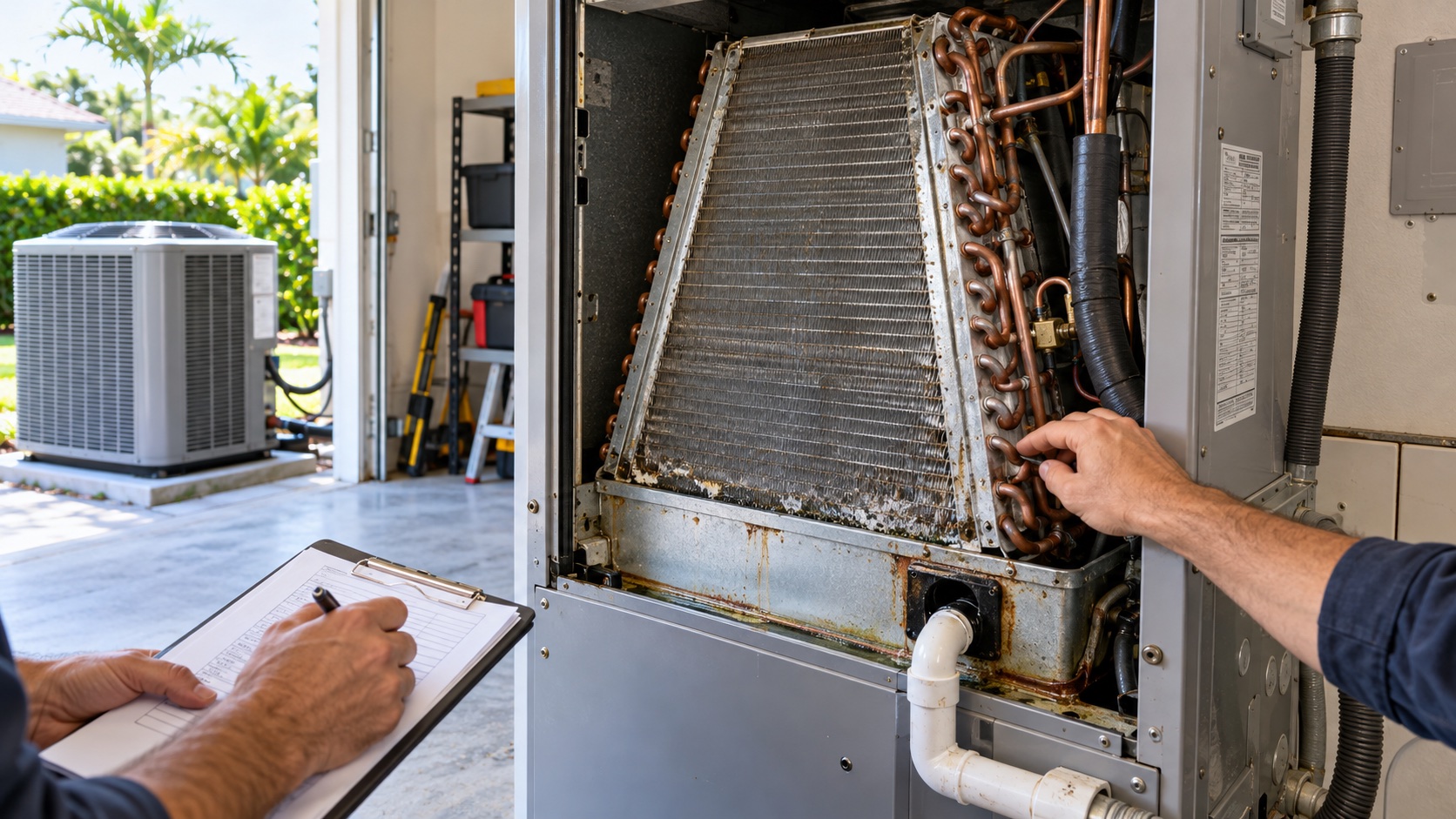
Failure evidence, equipment compatibility, refrigerant, condition, warranty, installation scope, and remaining risk determine whether a coil-only repair is sensible.
A coil-only repair may be reasonable when the outdoor unit and blower are in good condition, the combination is compatible, the refrigerant remains serviceable, warranty support is meaningful, and installation access is practical.
Compare complete replacement when major components are aging, corrosion is widespread, repair history is growing, efficiency or humidity performance is poor, matching is difficult, or the coil project represents a large share of a new system’s installed cost.
A covered coil may still leave labor, refrigerant, shipping, or related work.
The condenser, compressor, blower, controls, ducts, and line set affect value.
A planned replacement can reduce disruption when other components are near failure.
Proper work may include recovery, nitrogen brazing procedures, evacuation verification, metering-device setup, refrigerant charging by the specified method, airflow adjustment, filter fit, drain-pan and trap correction, float-safety testing, cabinet sealing, and insulation.
Record model and serial numbers, refrigerant quantity, pressures and temperatures, airflow or static pressure, drain testing, warranty information, and what existing components remain.
Use these related First Degree Air Conditioning resources to compare the next repair, maintenance, equipment, or operating question without leaving the topic unfinished.
These answers help compare a component repair with complete matched-system replacement.
Yes, when a compatible coil is available and the remaining system is suitable, but matching and installation requirements must be verified.
No. The leak may be elsewhere, and airflow or control problems can also create similar symptoms.
It may restore lost performance, but system efficiency depends on the matched combination, airflow, ducts, charge, controls, and installation.
Not automatically. Compare uncovered project costs, system age and condition, compatibility, remaining coverage, and future repair risk.
Federal and certification guidance supports matched equipment, proper refrigerant service, airflow, and installation quality.
This article combines professional research and writing with technical review by the owner of a licensed Palm Beach County HVAC company. The editorial and contractor roles are identified separately so readers can understand how the guidance was prepared.
Senior SEO and Content Specialist at SoFloWeb
Dana is an experienced HVAC content writer who creates clear, useful guidance grounded in careful research and reliable industry sources.
Owner, First Degree Air Conditioning
Florida Certified Mechanical Contractor · CMC1250863
Tom reviewed the HVAC guidance for practical accuracy and consistency with real equipment service in Palm Beach County.
This article is educational and does not replace the instructions for the installed equipment or an onsite HVAC evaluation.
First Degree Air Conditioning can locate refrigerant leaks, inspect coil and system condition, verify equipment compatibility, and compare a coil project with complete replacement.