Most people think of their HVAC system as something that simply heats and cools the air. But inside that system, another process is happening all the time. Air constantly circulates through coils, ducts, and drain pans where moisture and dust can collect. In South Florida’s hot, humid climate, those conditions can allow microbes such as mold and bacteria to grow inside the system.
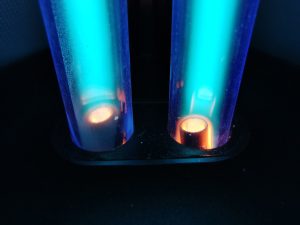
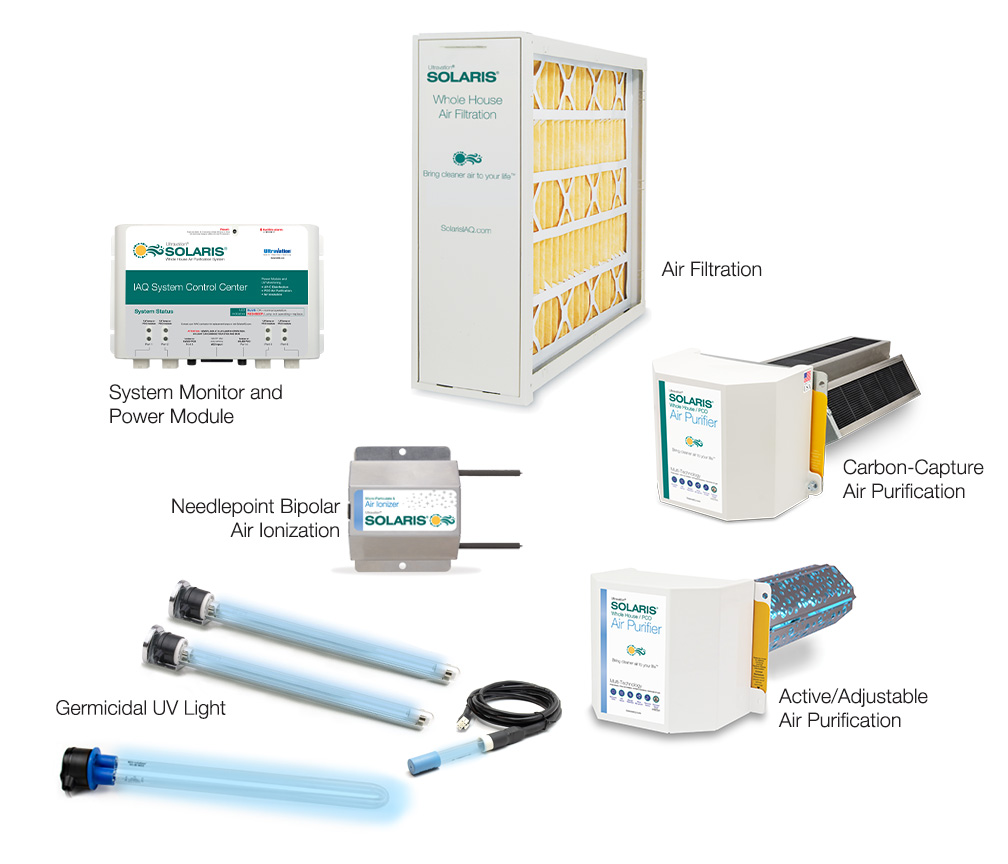
A Solaris® IAQ System Control Center uses ultraviolet purification technology to help control that problem. The system installs germicidal UV-C light inside the HVAC unit, where it continuously exposes microorganisms such as mold, bacteria, and viruses to ultraviolet energy as air moves through the equipment.
As part of a broader indoor air quality platform, Solaris systems can also incorporate additional technologies designed to help address odors, airborne particles, and certain chemical pollutants circulating through the HVAC system.
By targeting microbial growth at the source, a Solaris UV light system helps improve indoor air quality and support cleaner HVAC operation in homes and commercial buildings.
Why Mold and Bacteria Grow Inside Your Air Conditioning System
Your AC naturally creates moisture as it cools the air. When warm air passes over the evaporator coil, condensation forms and drains away through the system’s drain pan. In humid climates like Florida, those areas can stay damp for long periods. That persistent moisture is one reason mold prevention inside HVAC systems is crucial for homes in coastal and subtropical climates.
Moisture combined with dust and organic particles can create the perfect environment for mold and bacteria to grow inside the system. Once microbes begin growing on coils or nearby components, the HVAC system may circulate those contaminants through the ductwork as air moves through the home or building.[1]
This relentless moisture is one reason indoor air quality solutions are becoming more common in both residential and commercial HVAC systems.
Because HVAC systems recirculate the same air repeatedly, controlling microbial growth within the equipment can play an important role in overall indoor air quality.
How UV-C Light Disrupts Germs Circulating Through Your HVAC System
UV air purification systems use a technology called ultraviolet germicidal irradiation (UVGI). UV-C light carries enough energy to damage the DNA or RNA of microorganisms such as bacteria, viruses, and mold spores. Once that genetic material is disrupted, the microbes can no longer reproduce or spread.[2]
In an HVAC system, the UV light typically operates continuously while the system runs. As air passes through the unit, microorganisms exposed to the UV-C energy are neutralized before they can continue circulating through the space.
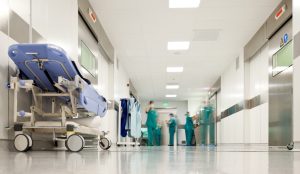
UV technology has been used for decades in environments where air cleanliness is critical, including hospitals, laboratories, and other healthcare facilities.[3]
Where the Solaris® IAQ System Control Center Works Best Inside Your HVAC Unit
A Solaris UV light system is installed directly inside the HVAC equipment where microbial growth is most likely to occur. In many systems, the UV light is positioned near the evaporator coil and drain pan, which are common areas for moisture and biological buildup.
The UV energy shines continuously across these components, helping reduce mold growth on surfaces while also exposing microorganisms that pass through the air stream.
Because the system operates within the HVAC unit, the purification process occurs automatically as air circulates throughout the home or building.[4]
From Hospitals and Commercial Buildings to Homes: How UV Air Purification Expanded
UV air purification technology isn’t new. For years, it has been used in large buildings such as hospitals, schools, laboratories, and office complexes to help manage airborne contaminants and maintain indoor air quality.
Today, many of those same technologies are being adapted for residential HVAC systems. As homeowners become more aware of indoor air quality and allergens, whole-system solutions like UV air purification are becoming as common in homes as they are in commercial spaces.
These systems can benefit a wide range of environments, including:
- Homes in humid climates
- Apartment buildings
- Offices and retail spaces
- Schools and healthcare facilities
What Makes Solaris Different Than Other HVAC UV Lamp Systems
Not all HVAC UV lights are designed the same way. Many systems rely on a single UV bulb placed near the coil to reduce microbial growth.
Solaris systems are designed as part of a broader indoor air quality platform. Depending on the configuration, Solaris systems can combine UV purification with additional technologies that target odors, airborne particles, and chemical pollutants throughout the HVAC system.[4]
The Solaris air purifier system can also integrate additional air-treatment technologies, such as photocatalytic oxidation and ionization modules, designed to address odors, airborne particles, and certain chemical pollutants circulating through the HVAC system.
This multi-layered approach allows the system to address several indoor air concerns at once, rather than focusing solely on surface mold growth inside the unit.
Cleaner Air and Healthier HVAC Performance with Solaris UV Technology
The Solaris IAQ system combines several air treatment technologies, including germicidal ultraviolet light, to help prevent microbial growth and improve indoor air quality. By neutralizing microorganisms and helping keep key HVAC components cleaner, these systems can support healthier airflow throughout residential and commercial buildings.
As homeowners and building managers place greater focus on indoor air quality, integrated solutions like the Solaris IAQ system are becoming a more common upgrade in modern HVAC systems.
Resources:
- Does ultraviolet (UV) radiation from UV lamps kill mold? United States Environmental Protection Agency (EPA) [Internet]. Accessed February 28, 2026. Available from: https://www.epa.gov/mold/does-ultraviolet-uv-radiation-uv-lamps-kill-mold
- About Germicidal Ultraviolet (GUV). National Institute for Occupational Safety and Health (NIOSH). Published October 04, 2024. Accessed February 28, 2026. Available from: https://www.cdc.gov/niosh/ventilation/germicidal-ultraviolet/index.html
- ULTRAVIOLET LAMP SYSTEMS. ASHRAE American Society of Heating, Refrigerating and Air-Conditioning Engineers. Accessed February 28, 2026. Available from: https://www.ashrae.org/file%20library/technical%20resources/covid-19/i-p_s20_ch17.pdf
- Whole-house solutions for the entire range of indoor contamination. Ultravation Solaris [Internet].Accessed February 28, 2026. Available from: https://solarisiaq.com/