Maintaining your home’s indoor comfort is essential for you and your family, primarily if you reside in a warm, tropical climate like South Florida. One vital aspect of home comfort is ensuring your air conditioning system functions efficiently. Regularly replacing the air filter goes a long way toward maintaining indoor air quality and system performance.
Residential air conditioners use air filters to trap dust, pollen, mold spores and other airborne particles. The filter creates a barrier that prevents particles and debris from circulating through the system and ending up in the air you breathe. However, air filters eventually become dirty and clogged with this accumulated debris, which impedes airflow and reduces the system’s function.
The Importance of Changing Your AC’s Air Filter
Regularly replacing your AC’s filter is crucial for several reasons. Clean filters ensure optimal airflow, allowing your system to operate efficiently. Restricted airflow causes increased energy consumption, and your system has to work harder to cool your living space. The result is higher electric bills and unnecessary wear and tear on your AC.
Clean air filters trap airborne contaminants, promoting better indoor air quality. This is particularly important in households with allergy, respiratory, or autoimmune issues, which can be exacerbated by allowing allergens and pollutants to circulate within the home.
Factors That Affect When to Change Your AC Filter
Most air filter manufacturers and HVAC companies recommend changing your air filter at least every three months (90 days). Spaces that don’t get much use, like vacation homes, can go longer between air filter swaps. The frequency may change based on factors such as:
- Home location (cool or humid climates)
- Environmental factors (pollen, dust, air pollution
- Age of your AC system
- Indoor pets
- Number of people in the home
- AC usage patterns
- Residents have allergies or respiratory issues
- Filter type
- Manufacturer recommendations
- Visual inspection
Regardless of what you and your HVAC company have decided is the proper time frame for your filter change, if, upon visual inspection, your filter is dirty or clogged, it’s time to replace it.
How Often Should You Change Your Air Filter in South Florida?
Florida offers residents warm, sunny days nearly year-round, but the climate dictates that air conditioners have high run times. To combat high temperatures and humidity, ACs in South Florida cycle on and off all day as they satisfy the set temperature for the space. Because they are in operation all day, every day, the air filter accumulates dirt and debris quickly. Homeowners should check the air filter every month and replace it once it appears dirty or clogged. South Florida homes with pets or occupants with allergies should change their air filters at least once a month, if not more often if needed.
Choosing an Air Conditioner Replacement Filter
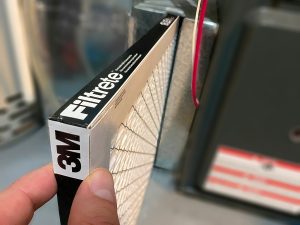
It’s essential to choose a replacement AC air filter that is compatible with your unit’s specifications. Consider factors such as filter size, filtration efficiency (MERV rating), and any concerns such as allergies or pet dander. High-efficiency filters may offer superior filtration but can also restrict airflow, so balancing filtration and system performance is essential. When in doubt, ask your HVAC technician for the best air filter for your system and household requirements
The Benefits of Professional HVAC Maintenance
Routine AC maintenance, including air filter replacement, offers numerous benefits, such as:
- Improved system performance
- Maintain energy efficiency
- Better indoor air quality
- Address minor issues before they become costly repairs
- Extends the lifespan of HVAC equipment
By prioritizing maintenance tasks such as air filter replacement and professional inspections, homeowners can ensure their HVAC systems operate optimally, saving money and promoting comfort and well-being in the home.