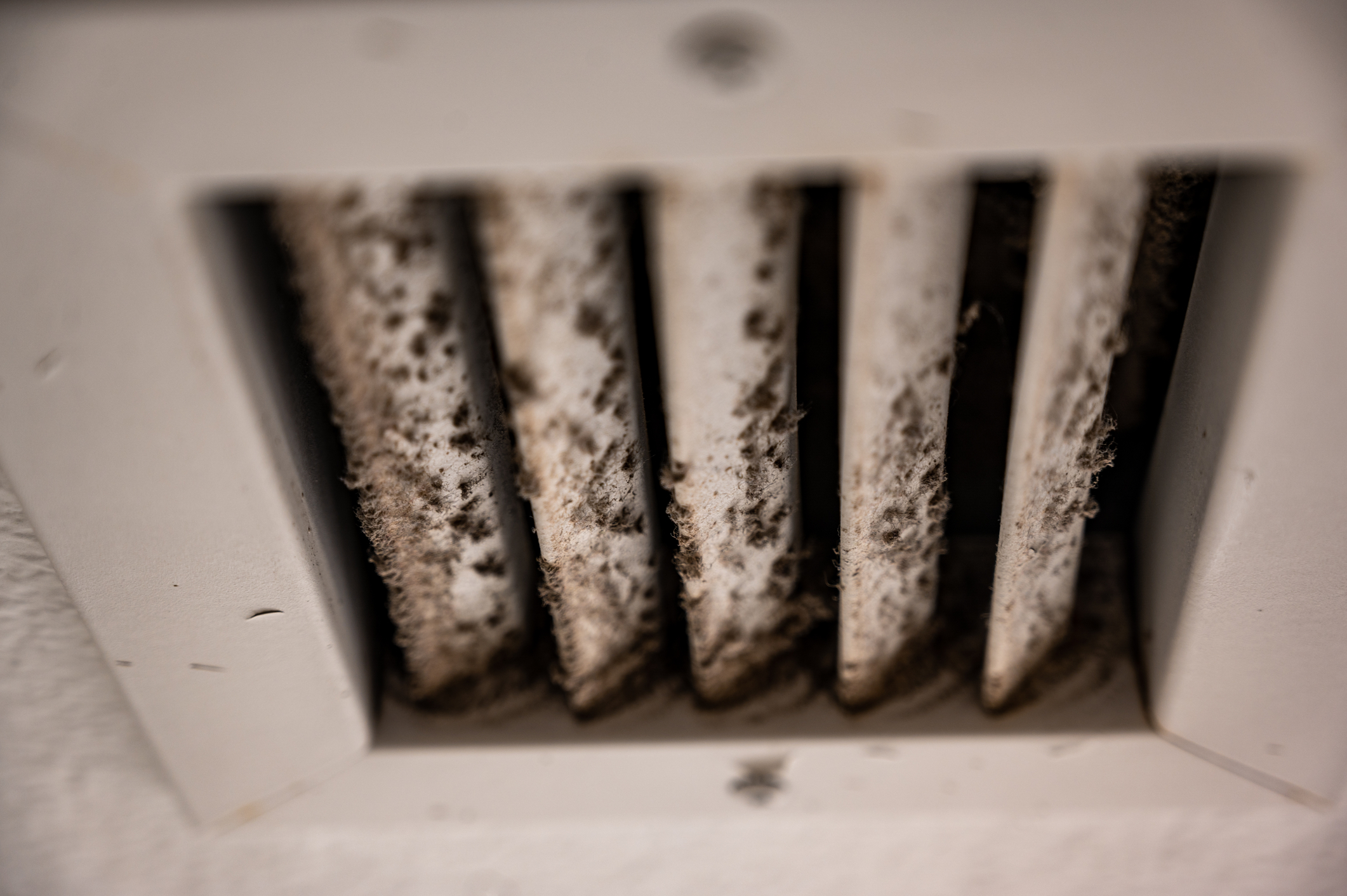
Living in South Florida means loads of sunshine and palm trees, but the tropics also bring relentless heat and humidity. That’s the perfect storm for mold and mildew to settle into your air conditioning system. It’s not uncommon for residential AC air ducts to harbor mildew growth and even full-blown mold colonies. Not only is mold detrimental to your HVAC system, but it is also a health hazard that can cause serious medical issues if left unaddressed.
Let’s talk about how to spot mold creeping into your ductwork, why it’s bad news for your indoor air quality (and your health!), and what you can do about it—from tackling musty smells to investing in upgrades like UV lights for an extra layer of mold prevention.
How Did Mold Get in My AC Ducts?
Mold only needs three things to feel right at home in your house:
- Spores
- Moisture
- A food source, like dust or other organic debris
Those tiny spores ride the air currents in your home, cruise through your AC system, and settle into your ducts like uninvited guests. Add a little humidity, maybe from duct sweating, condensation, or moisture on your evaporator coil, and you’ve rolled out the red carpet for mold.
Poor-quality or ill-fitting air filters allow dust to slip through and collect on the coil and within the ductwork. Running your AC without a filter? That’s like giving mold a free pass.
Once it finds a damp, cozy spot in your air handler, mold can spread through your ducts, vents, and straight into the air you breathe. The result? Compromised HVAC equipment, poor indoor air quality, and potential health issues for you and your family.
Mold in Air Vents: Signs & Symptoms to Watch For
- Musty, earthy smells when the AC kicks on are a classic sign of mold hiding in the vents.
- Visible dark spots or fuzzy patches around vents or duct joints, which may be black, green, or white mold.
- Poor indoor air quality and even surfaces may feel dustier after cleaning.
- Condensation or moisture around vents on ductwork or other HVAC components. You may also have water damage (water stains, rust or dampness) around your indoor unit.
- Increased electric bills because mold growth impacts your system, making it work harder.
- Unexplained illness or physical reactions like allergy symptoms, coughing, sneezing, itchy eyes, respiratory issues, headaches, sore throat, skin irritation, dizziness or even nausea
Spot mold anywhere in your home? Please don’t ignore it. If it’s growing on walls, ceilings, or even around windows, there’s a higher chance it’s also lurking in your ducts or AC unit. The safest move? Have your system inspected by a professional before a minor issue becomes a significant problem.
Is Mold in the AC Vents and Ductwork Unhealthy?
Yes, mold is a health hazard for everyone, particularly for those with sensitive immune systems. According to the EPA, mold releases Microbial Volatile Organic Compounds (MVOCs), which can be dangerous or even toxic to you, your family, and your pets. You may smell mold before you ever see it.
Do you have odors like wet dog, smelly socks, or a funky locker room, but haven’t been able to find the source? You most likely have mold growing somewhere in your home. Mold spores and their allergens may trigger hay fever symptoms, including sneezing, a runny nose, red eyes, skin rash, throat irritation, and can worsen asthma attacks.
The CDC states that mold exposure can lead to serious illness in healthy individuals, and those with immunocompromised conditions face a greater risk. They also list Cladosporium, Penicillium, and Aspergillus as the most common suspects found in Florida homes and HVAC systems.
How Can I Remove Mold from My Air Ducts?
If you suspect mold in your ducts, it’s likely also present in your air handler, growing on the coil and spreading throughout your home with every AC cycle. Mold in your ducts is not a DIY fix, and attempting to clean it yourself can exacerbate the problem.
A licensed HVAC professional has the tools, protective gear, and specialized agents to safely remove mold, replace contaminated parts, and identify the source, whether it’s leaks, high humidity, or water damage, so it doesn’t recur.
How to Prevent Future Mold Problems in Air Ducts
Your HVAC technician will help you with these key points to keep moisture and mold at bay.
- Control humidity
- Use whole-house UV light air sanitizers
- Keep ducts sealed and insulated
- Run AC in AUTO fan mode
- Schedule routine HVAC maintenance
- Ensure good airflow and ventilation
Call Your Local HVAC Pros to Give Mold an Eviction Notice
Mold in your AC ducts isn’t just an inconvenience; it’s a direct attack on your indoor air quality and your family’s health. In Florida’s humidity, mold can spread fast, so keep an eye (and nose) out for musty smells or visible growth.
At the first sign of damp odors or mold infiltration, call a pro to inspect, clean, and fix moisture issues. Regular maintenance, proper humidity control, duct sealing, and upgrades such as UV lights can help prevent mold from recurring. Act quickly! Your home (and lungs) will thank you.
Mold Awareness Tips for Commercial HVAC Customers
Mold can lurk where you’d least expect it in commercial HVAC systems—deep in sprawling duct networks and hidden spaces like between floors, above ceilings, or inside walls. Out of sight doesn’t mean out of danger; these hidden colonies can quietly spread spores through your entire building. The fix? Control moisture by ensuring proper sealing and ventilation. Install UV lights to prevent growth at its source, and schedule routine maintenance and airflow checks to protect the health of your employees and clients.