In the sweltering summer heat, your air conditioner offers an oasis from the brutal temperatures outside. When it stops cooling effectively, most homeowners become immediately frustrated. If your air conditioning system is running but not blowing cool air into your living space, your unit may be frozen. Sometimes, AC units have visible ice on the evaporator coil, making it easy to identify what’s wrong, but understanding why takes a little investigation.
What is An Evaporator Coil?
Before trying to figure out why your evaporator coil is frozen, it’s essential to understand where it is and what it does. Air conditioner evaporator coils are vital for cooling the air inside your home. Located inside the indoor unit, the coil absorbs heat from the air, cools it down and then blows it back into your living space. Essentially, it acts as the catalyst for the cooling process in your AC system.
Frozen Evaporator Coil Causes
Coils are supposed to be cold but not frozen. To understand how cold, HVAC techs often say, “Beer can cold,” like the temperature of a beverage you just took out of the refrigerator. If your air conditioner runs effectively, the refrigerant should be approximately 40°F. The coil will freeze and build up ice if it is colder.
Several factors can contribute to the freezing of your evaporator coil:
Restricted Airflow
One of the leading causes behind a frozen evaporator coil is restricted airflow. Limited airflow happens when air filters are dirty, vents are closed or otherwise obstructed or the blower motor malfunctions. Restricted airflow makes the coil too cold, creating condensation that freezes on its surface.
Low Refrigerant Levels
Refrigerants are the lifeblood of air conditioners. They absorb and release heat to facilitate the cooling process. Low levels are due to leaks in the system and eventually lead to poor heat absorption by the evaporator coil. As a result, the coil becomes too cold, and freezing occurs.
Thermostat Problems
Incorrect thermostat settings or faulty thermostats can contribute to a frozen evaporator coil. If the thermostat is set too low or fails to read the temperature in the space accurately, it may continuously call for cooling, and eventually, the evaporator coil freezes.
Dirty Coil or Cooling Components
Dirt, debris, or grime buildup on the evaporator coil or other components can impede proper heat exchange and airflow. This can lead to the coil becoming excessively cold and prone to freezing.
Low Outdoor Temperatures
When outdoor temps drop, the coil can freeze like when airflow is restricted. If there is little to no warm air to cool, the lack of heat can create condensation on the coils and lead to freezing.
Blocked Condensate Drain Line
If the drain pipe responsible for carrying condensate water away is clogged, the accumulated moisture has nowhere to go. As the moisture on the coil remains stagnant, it begins to freeze, gradually forming a layer of ice on the coil. The ice restricts airflow across the coil and can potentially cause a complete freeze-up.
What to Do if You Have a Frozen Evaporator Coil?
If you notice that your evaporator coil is frozen, it’s essential to take immediate action to prevent further damage to your AC system and restore cooling efficiency.
Here’s what you can do:
Turn Off the AC
First, turn off your air conditioning system to prevent further ice buildup and potential damage.
Check Air Filters
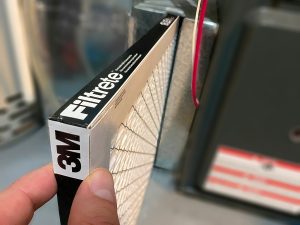
Inspect and replace dirty or clogged air filters to ensure proper airflow throughout the system.
Clear Obstructions
Ensure that vents and registers are open and unobstructed to promote adequate airflow.
Check the Drain Pan & Drain Line
Check the drain pan to see if it’s overflowing. Step outside to inspect your condensate drain pipe for good water flow or obstruction. Use a wet/dry vac to clear the drain pan and pipes of any clogs.
Allow Thawing
Let the evaporator coil thaw entirely before restarting the AC system. This process may take several hours.
How to Troubleshoot Evaporator Coil Issues
Once the evaporator coil has thawed, you can troubleshoot potential issues to prevent future occurrences:
Check Refrigerant Levels
Have a professional HVAC technician inspect your system for leaks and ensure proper refrigerant levels.
Inspect Drain Pan & Drain Lines
If your drain pan is full or you don’t see condensate dripping from your AC drain pipe, the frozen coil is likely due to an obstruction. Remove the blockage with a shop vac to restore water flow from the drain pan.
Clean Components
Clean and maintain the evaporator coil, blower motor, and other system components regularly to prevent debris buildup and airflow restrictions. In most cases, this requires the attention of an experienced HVAC technician.
Calibrate Thermostat
Verify that your thermostat works correctly and is calibrated to the proper settings for optimal cooling efficiency.
What to Do if You Can’t Stop the Evaporator Coil from Freezing?
You’ve taken the advised steps to address airflow, refrigerant levels and thermostat settings, but the evaporator coil keeps freezing. The next step is to contact a trusted air conditioning company. Frozen evaporator coils are common in residential AC systems, but a qualified HVAC tech can diagnose the cause and recommend the best solution to restore your AC system’s function.