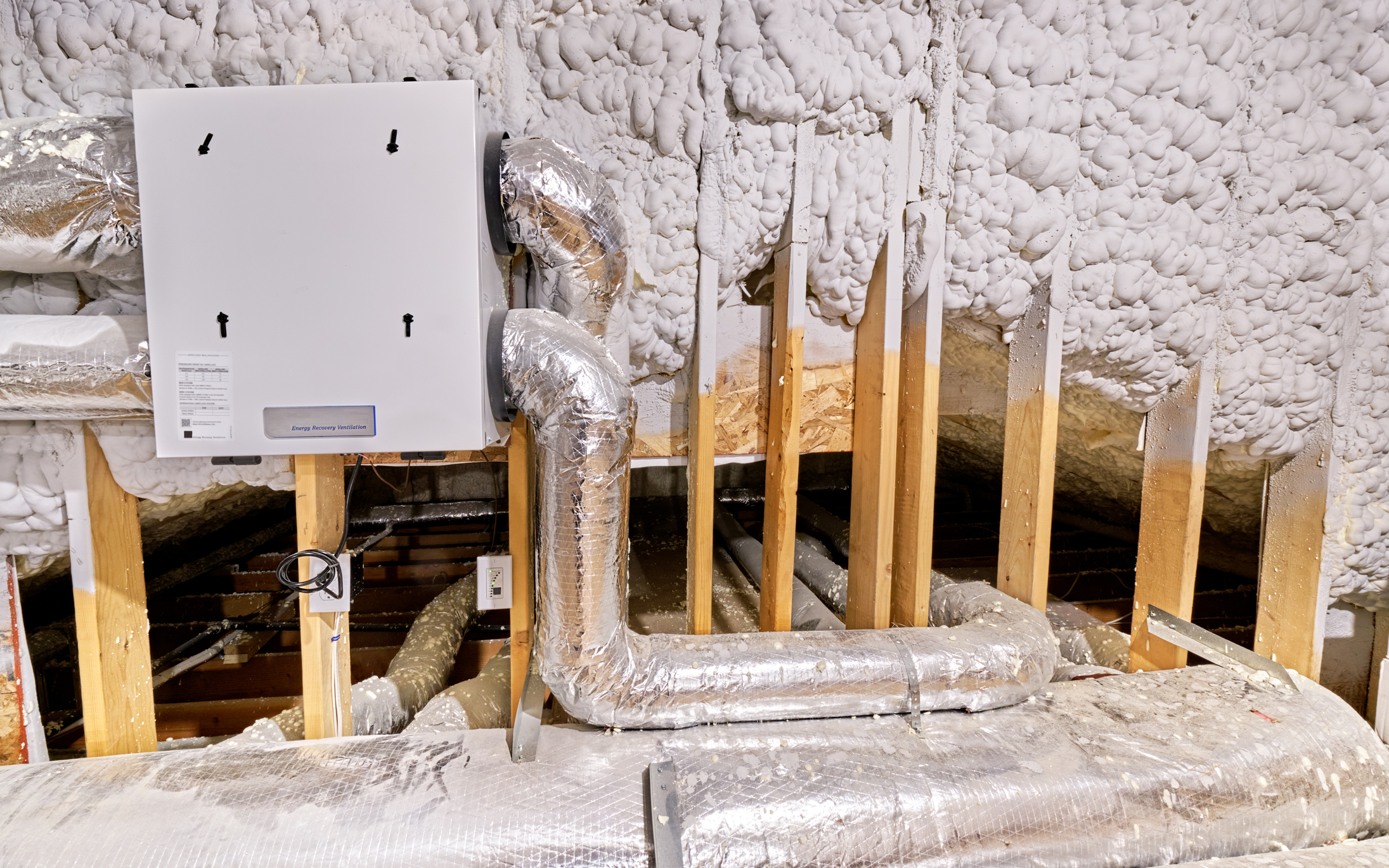
Looking to improve your indoor air quality, balance humidity and save money on your cooling costs? Energy recovery ventilators (ERVs) are a practical solution for Florida homeowners and business owners to address these concerns. You could open a window to let in some fresh air, but that air isn’t filtered or conditioned — it’s raw outdoor air. In Florida, that means letting in hot, humid air, which forces your AC to work overtime to cool and dehumidify your home or office. Energy recovery technology like ERVs improves HVAC system performance by pre-conditioning the air while a constant flow of fresh outdoor air creates a healthier indoor environment.
In summer, the ERV helps cool and dehumidify the fresh air before it enters your home. In winter, it retains heat to warm the incoming air, ensuring your indoor space stays comfortable year-round without wasting energy.
Let’s explore how ERVs reduce cooling demands, improve air quality, and where they work best.
What Is an ERV?
An Energy Recovery Ventilator (ERV) is an HVAC component, sometimes called an air exchanger, designed to improve indoor air quality by continuously “exchanging” stale indoor air with fresh outdoor air. Unlike simply opening a window, an ERV preconditions the incoming air, reducing the strain on your HVAC system.
The core of an ERV system is a metal transfer unit integrated into your ductwork. This unit contains four ports and two fans — one to pull fresh air in and another to push stale air out. As air moves through the system, outgoing air transfers heat and moisture to the incoming air without the two streams mixing. During this process, the air transfer unit uses outgoing stale air to precondition the incoming outdoor air without mixing it.
How an Energy Recovery Ventilator System Works
Once installed, an ERV works alongside your central heating and cooling system to maintain a healthy, energy-efficient airflow throughout your home. The system’s two fans operate in tandem — one fan pulls fresh outdoor air in while the other expels stale, recycled air from inside. As these two air streams pass through the transfer unit, the ERV captures heat and moisture from the outgoing air and transfers it to the incoming air. This process preconditions the air, balancing both temperature and humidity levels.
In hot, humid climates like Florida, the ERV helps by reducing the moisture content of the incoming air before it reaches your air conditioner. This reduces the workload on your AC system, lowers energy consumption, and keeps your indoor humidity in check. It helps retain warmth and minimize heat loss in colder weather, making your heating system more efficient.
Ultimately, an ERV improves indoor air quality while optimizing your HVAC system’s performance, ensuring a consistent, comfortable environment throughout the year.
Benefits of an ERV Air Exchanger
Here are some benefits homeowners and business owners can enjoy when an ERV is installed:
- Improved indoor air quality
- Better HVAC performance
- Improved humidity control
- Year-round benefits
- Easy maintenance
- Consistent, comfortable indoor spaces
- Eco-friendly
- Energy efficient (lower cooling costs!)
- Improved odor control
- Controlled ventilation
ERVs Can Be Installed Anywhere
Energy recovery ventilators are not limited to specific types of buildings or climates. They are ideal for any space that requires heating and cooling. ERVs can be installed in homes, residential buildings, commercial spaces, offices, etc. With various sizes and configurations available, they can be installed in new construction or retrofitted to integrate into existing HVAC systems.
Modern homes and buildings are built airtight and can dramatically benefit from mechanical ventilation to improve indoor air quality. An ERV system solves this problem by continuously providing fresh air while filtering stale indoor air. The best part? It preconditions the incoming air, reducing the strain on your HVAC system and keeping your indoor environment comfortable and efficient.
Do I Need an Energy Recovery Ventilator?
If you’re dealing with stale indoor air, high energy bills, or humidity issues, an ERV might be your solution. Structures tightly sealed for energy efficiency often trap indoor pollutants, making fresh air ventilation crucial. An ERV provides fresh air and improves energy performance. This HVAC technology is ideal for heating and cooling, unlike HRVs (heat recovery ventilation), which are only beneficial when heat is used.
Consult a trusted HVAC professional to assess your heating and cooling needs and determine if an ERV is the right fit. Investing in an ERV can improve comfort, air quality, and energy efficiency, making it a valuable investment for many business owners and homeowners.