Just because you live in Florida doesn’t mean your in-ground pool stays warm year-round. Sure, during summer your pool feels like you’re swimming in bathwater, but in the cooler months, your pool turns into a polar plunge! Okay, okay… maybe it’s not that chilly, but as overnight temperatures drop, so does your water temperature, making it a tad too cool to enjoy comfortably.
With a good pool heater installed, you can knock the chill off and add more swim days to your calendar, making the investment worth it. But like most pool owners, the big question is: What kind of pool heater should I get? Let’s walk through what matters when shopping for a pool heater, so you get the best one for your specific scenario.
Factors You Need to Consider When Selecting Pool Heaters
The size of your pool matters, but water volume is not the only thing. Where you live, how you use your pool, the desired temperature, and even your pool’s design can (and should) influence your heater choice. “Big enough” doesn’t always mean “best fit.”
Does Where I Live Matter When Choosing a Pool Heating System?
Absolutely. In colder states, a gas heater may be the only way to extend your heating season. But here in Florida, we’re blessed with mild winters and plenty of warm air, which is precisely why heat pump pool heaters dominate the market here. They’re efficient, reliable, and ideally suited for our climate.
Energy Efficient Pool Heaters? Your Wallet Will Thank You!
Gas heaters heat quickly but burn through fuel (and your budget). Electric resistance heaters work best for smaller spas or indoor pools. Heat pumps, though, are the gold standard option for Florida — pulling warmth from the air to heat your water, using far less energy than other types. Translation: more comfortable swims, lower monthly costs.
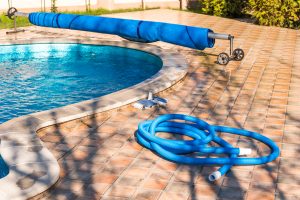
Pro Tip: Pair your pool heat pump with a quality solar or thermal pool cover. It’s one of the easiest ways to trap heat overnight, reduce evaporation, and cut your heating costs by up to 50% — especially during Florida’s cooler months.
Heating Indoor vs. Outdoor Pools
Indoor pools lose less heat overnight, so they often require smaller heaters. Outdoor pools are exposed to breezes, evaporation, and nighttime temperature drops, all of which can increase heat loss and affect the size of the heater.
Why Your Pool’s Design Matters When Choosing a Heater Type
Got a waterfall feature? A spa spillover? A deep end that feels like the Mariana Trench? All these features are great, but they can speed up heat loss. More moving water equals more heat escaping, which means your heater will work harder. Choosing the right size keeps it from running constantly (and keeps your electric bill in check).
How Warm Do You Like Your Swimming Pool Water?
Some folks are happy with “just warm enough,” while others want spa-like temperatures. Heat pumps excel at maintaining steady, comfortable warmth. If you wish to rapid heat for occasional dips, gas still heats fastest, but at a premium.
After ALL That, What Size Pool Heater Do I Need?
Sizing is about more than gallons of water. A good HVAC or pool heating specialist will calculate your BTU requirements based on your pool’s volume, exposure to wind and shade, average air temperature, and desired water temperature. Guessing often leads to disappointment — or a much higher power bill.
What’s the Best Pool Heater For Your Florida Pool?
For most Florida homeowners, a heat pump pool heater is the sweet spot. They’re energy-efficient, last for years, and work with our climate instead of against it.
Why not solar? While Florida receives plenty of sun, solar pool heaters can be unpredictable. Cloudy days and cool nights can leave you with chilly water, and there’s no quick way to warm it up. That’s why we focus on dependable, all-weather options, such as heat pumps.
How to Maximize the Life of Your Pool Heater
Regular cleaning, balanced water chemistry, and yearly professional maintenance will keep your heater running smoothly and extend its service life.
Install an Electric Heat Pump and Enjoy Your Pool Year-Round
The right pool heater turns your pool into a year-round retreat, not just a summer perk. For Florida pools, an appropriately sized heat pump will keep you comfortable, your bills reasonable, and your swim calendar wide open. An HVAC technician specializing in pool heating can help you determine the right size, type, and even the best brand to keep your water at the perfect “just right” temperature.
Professional installation not only protects your manufacturer’s warranty but also ensures your system is ready for peak performance. Additionally, working with a company experienced in repairs and maintenance ensures that your pool heating equipment will run efficiently and last longer. Choose wisely, and you’ll wonder how you ever swam without one.
Florida-Specific Tips for Pool Heating Equipment
Our coastal air can be tough on equipment, especially the closer your home is to the beach. Opt for corrosion-resistant models and use a pool cover at night to prevent corrosion. It can dramatically reduce heat loss and lower your energy costs. Choosing the right pool heater is just the first step—proper installation and regular maintenance are equally important.
Routine pool heater servicing helps extend the system’s life, ensures optimal efficiency, and reduces the risk of breakdowns during peak usage. Filters, heat exchangers, and sensors should be inspected and cleaned as needed to maintain performance in Florida’s humid and salty environment. A well-maintained heater not only saves energy but also protects your investment. Partnering with a qualified technician for seasonal checkups is the best way to keep your pool comfortably heated year-round.