A pool heater can make a big difference in how often you use your pool, especially when South Florida temperatures dip just enough to make the water uncomfortable. But if you are thinking about adding or replacing one, you probably have one practical question: How long does pool heater installation take?
A straightforward professional pool heater replacement can often be completed within a day when the existing plumbing, utilities and equipment pad are ready to go. A new pool heater installation may take longer if you need to add or modify electrical service, gas or propane lines, plumbing, a concrete equipment pad or pool controls. Permitting and inspections can also add time to the overall project.
What Affects the Pool Heater Installation Timeline?
Installing a pool heater involves more than placing the equipment beside your pool and connecting a few pipes. Your HVAC technician needs to consider the heater type and size, pool volume, existing circulation system, available utilities, equipment location and manufacturer specifications.
Florida also has specific energy-efficiency requirements for swimming pool water heaters. Florida Statute §553.909 requires residential and commercial swimming pool heaters manufactured and sold for installation in the state to comply with Florida Energy Efficiency Code requirements.[1]
What Happens During Professional Pool Heater Installation?
The exact process depends on whether your technician is swapping out an old pool heater or installing a brand-new heating system. That distinction can also determine how much extra time is needed for things like permits, inspections, utility work or preparing a new equipment pad.
Site Assessment and Pool Heater Sizing
Before installation, your technician evaluates the pool, existing equipment and how you plan to use your heater. Pool size, desired temperature, climate and heater type all affect equipment selection. The U.S. Department of Energy also maintains federal energy conservation standards and testing requirements for consumer pool heaters.[2]
This is also when your technician can determine whether a heat pump pool heater, electric heater, natural gas heater or propane pool heater is the right fit for your setup.
Plumbing, Water Flow and Bypass Requirements for Florida Pool Heaters
Your new heater has to work properly with the pool's existing circulation system. Installation may require plumbing modifications, unions, valves or a heater bypass.
Florida Building Code provisions specifically state that water flow through a pool heater, bypass plumbing, back-siphoning protection and heat sinks must follow manufacturer recommendations.[3] Getting the water flow right helps the heater operate as it should while protecting the heat exchanger and other components.
Pool Heater Electrical, Gas or Propane Connections
A heat pump pool heater may require a dedicated electrical circuit or electrical upgrades. Gas and propane heaters require properly sized fuel connections and other installation considerations specific to combustion equipment.
This is one of the biggest differences between a direct replacement and a brand-new installation. If utilities need to be added or modified, the project may take longer and could involve additional trades, permits or inspections.
Concrete Equipment Pad, Permits and Inspections
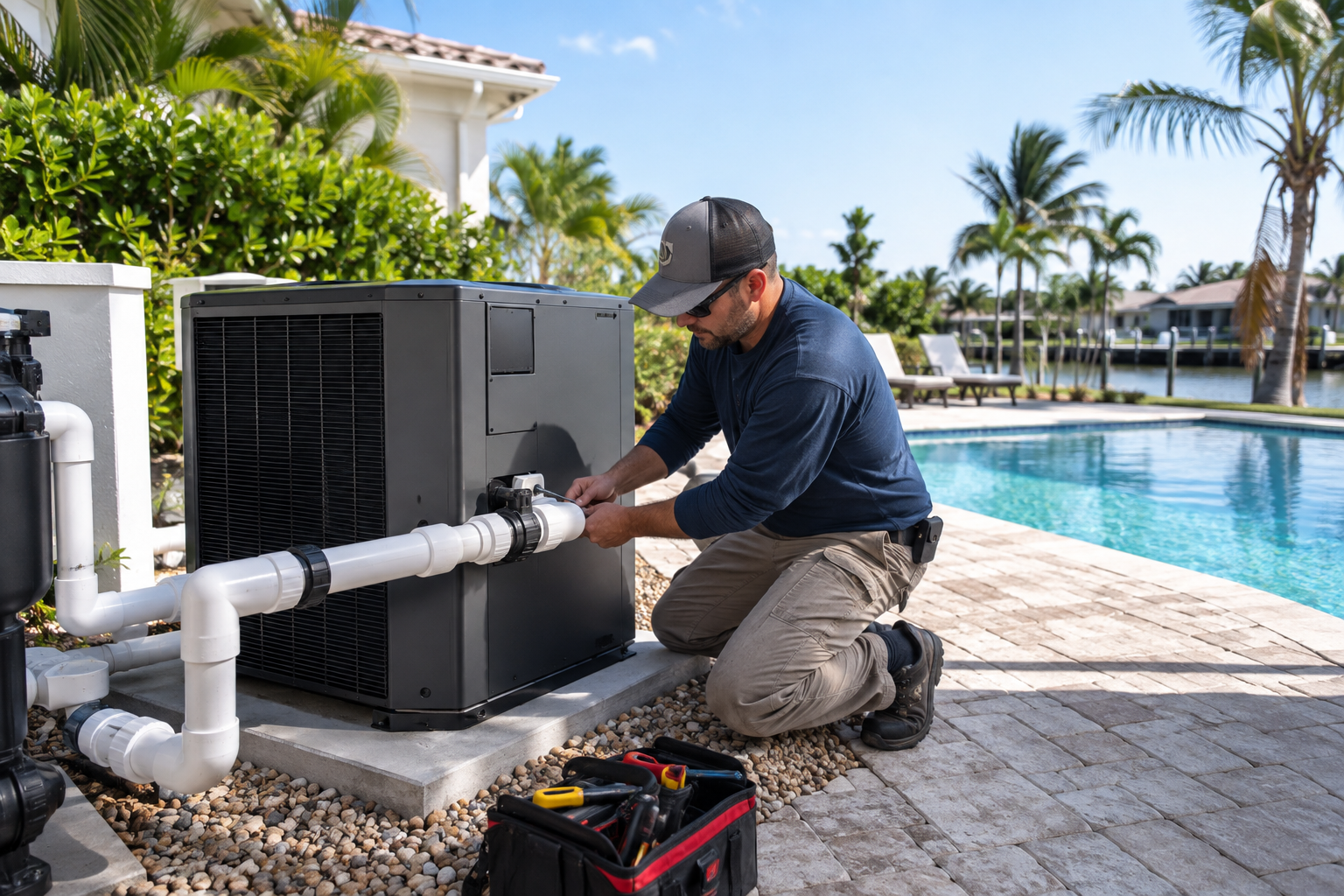
Pool heating equipment needs a stable, level mounting surface with enough clearance for airflow, drainage and future service. Depending on the heater and your existing pool equipment setup, you may need a new or enlarged concrete equipment pad. Pentair's UltraTemp heat pump installation instructions, for example, show the unit secured to a concrete equipment pad with anchor clamps and concrete anchors.[4]
Permitting and inspection requirements can also affect the total pool heater installation timeline. Your installer can determine what is required based on the heater, existing utilities and your specific setup.
Pool Heater Startup, Calibration and Smart Controls
Installation isn't finished when the last connection is made. Your technician still needs to start the system, check water flow, verify heater operation, test the connections and controls and make sure compatible pool automation or smart controls are communicating correctly.
Think of this as the final check before you start using your new heater. Testing and commissioning can catch potential problems and ensure everything operates as it should.
Can You Install a Pool Heater Yourself?
The real question is: Should you install a pool heater yourself? You can, but there are a few things to consider before turning this into your next DIY project.
Pool heaters can involve high-voltage electrical service, gas or propane, plumbing, specific water-flow requirements, equipment clearances and manufacturer-specific installation and startup procedures. A professional can also make sure the heater is correctly sized and works properly with your existing pump, filter, bypass plumbing and compatible smart controls.
And don't forget about your warranty. Professional installation may affect warranty coverage. Pentair, for example, requires qualified installation for extended warranty coverage on certain products and states that it may deny warranty claims for damage caused by failure to install equipment according to the owner's manual.[5]
For most homeowners researching DIY pool heater installation, calling a professional makes sense. It takes the guesswork out of the installation and helps ensure your new heater is installed safely, correctly and according to manufacturer requirements.
How Long Does a Pool Heater Take to Heat a Pool?
Your pool heater is installed, so where's the warm water? Pool heater installation time and pool heating time are different.
Even if your new pool heat pump is up and running the same day, your pool won't reach your desired temperature instantly. Initial warm-up can take a day or longer depending on pool size, starting water temperature, outdoor conditions, heater capacity and heat loss. Heat pump pool heaters generally warm water more gradually than gas-fired heaters, and their heating capacity can also change with ambient air temperature.[2]
Once the pool reaches your preferred temperature, maintaining it is a lot different from heating thousands of gallons of cooler water from scratch.
Protect Your Pool Heater Investment with Professional Installation
Adding a pool heater means you don't have to wait for the perfect South Florida weather to enjoy your pool. But getting the most from your new heater starts with choosing the right equipment and making sure it is installed correctly.
Proper sizing, water flow, equipment placement and electrical, gas or plumbing connections all matter. So does what happens after installation. Routine maintenance and professional service can help keep your pool heater running efficiently and catch small problems before they turn into bigger, more expensive ones.
Whether you are replacing an older heater or adding one for the first time, professional pool heater installation helps you get off on the right foot. Then you can spend less time worrying about your equipment and more time enjoying your pool.
Resources
- Florida Legislature, Florida Statute §553.909, “Setting Requirements for Appliances; Exceptions”. Online Sunshine – The Florida Legislature [Internet]. Accessed August 31, 2026. Available from: https://www.leg.state.fl.us/statutes/index.cfm?App_mode=Display_Statute&URL=0500-0599%2F0553%2FSections%2F0553.909.html
- Consumer Pool Heaters and Energy Conservation Standards for Consumer Pool Heaters. U.S. Department of Energy [Internet]. Accessed August 31, 2026. Available from: https://www.energy.gov/cmei/buildings/consumer-pool-heaters
- Florida Building Code, Swimming Pool Piping to Heater Requirements. Florida Department of Business and Professional Regulation (DBPR) [Internet]. Accessed August 31, 2026. Available from: https://www.floridabuilding.org/cm/cm_code_dtl.aspx
- UltraTemp High Performance Pool Heat Pump Installation and User's Guide. Pentair [Internet]. Accessed August 26, 2026. Available from: https://www.pentair.com/content/dam/extranet/nam/pentair-pool/residential/heaters/ultratemp/manuals/ultratemp-heat-pump-installation-and-users-guide-en-fr-sp.pdf
- Pool & Spa Equipment Warranty Information. Pentair [Internet].Accessed August 31, 2026. Available from: https://www.pentair.com/pool-spa/education-support/homeowner-support/pool-product-warranty-information.html