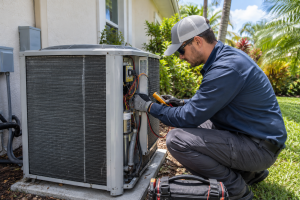
If you live in Florida, the answer is usually no. Whether your pool is heated by a gas pool heater or a pool heat pump, most homeowners won't need extra heat during the summer. Sunshine does most of the work for you, so your pool water is usually warm enough to enjoy swimming. Running your pool heater during the hottest months can increase energy costs without making your pool any more enjoyable.
That said, there is one important reason your pool heater shouldn't sit completely idle all summer.
While leaving your heater off can save energy, letting it sit unused for months may contribute to moisture-related corrosion and other maintenance issues that are much easier and less expensive to prevent than repair.
Just like many mechanical systems around your home, a pool heater benefits from occasional operation. A brief weekly run helps circulate water through the system, keeps internal components active, and can help prevent some of the problems associated with long periods of inactivity.
Why Most Florida Pools Don't Need a Heater in Summer
During the summer, Florida pools are naturally warmed by the infamous long days, high temperatures, and abundant sunshine. Water temperatures easily reach the upper 80s without any help from a pool heater.
If your pool already feels like bathwater, adding more heat won't do anything other than raise your electric bill. By mid-summer, many homeowners are actually looking for ways to cool their pool rather than warm it.
Think of it this way: Florida's sunshine heats your pool for free. Even pools in screened enclosures are usually warm enough during the summer months without much help from the heater. Running your pool heater when the water is already warm just uses more energy and creates extra wear on the equipment without much benefit. According to the U.S. Department of Energy, heating a swimming pool can be one of the biggest operating costs of pool ownership, so there's no reason to pay for heat you don't need.[1]
But, You Should Still Run Your Pool Heater Occasionally During Summer
Wait…didn't we just say you probably don't need to run your pool heater during the summer?
We did. But there's a difference between running your heater to warm the pool and running it briefly to keep the equipment in good working order.
Even if your pool doesn't need the extra heat, it's still a good idea to turn the heater on for about 10 to 15 minutes once a week.
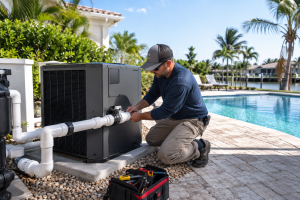
That quick run circulates water through the system, helps dry out condensation and discourages spiders or other small critters from making a home inside the cabinet. It also lets you confirm everything is operating properly before cooler weather returns.
Think of it as exercising the equipment. A few minutes of operation each week is very different from running the heater for hours when your pool is already warm.
It's also one of the easiest ways to help protect your investment and reduce the risk of rust and other problems that can develop during long periods of inactivity.
Simple Summer Pool Heater Maintenance Tips
As we already mentioned, summer isn't the season to leave your gas or electric pool heater running. Instead, think of it as another routine pool maintenance task, like checking your skimmer basket or vacuuming the pool. Simply turn on your pool heater while you're outside taking care of your regular pool chores.
Here are a few more easy ways to care for your pool heater during swim season:
Run Your Pool Heater for 10 to 15 Minutes Weekly
Turn your heater on. A brief weekly run circulates water through the heat exchanger, helps reduce internal moisture, and confirms the system is operating properly before you actually need it. Set a timer to remind yourself to turn it off or, if your heater has a built-in timer, set it to run for about 15 minutes and forget about it.
Keep the Area Around Your Pool Heating Equipment Clean
Remove leaves, mulch, grass clippings, and other debris that can block airflow or trap moisture around the equipment. Good airflow helps extend the life of both gas heaters and pool heat pumps.[2] This advice applies to your pool pump equipment, too.
Watch for Signs of Corrosion or Pests in or Around Your Pool Heater
Just walking past your pool equipment isn’t enough. Manufacturers recommend regularly inspecting pool heating equipment and following routine care and maintenance guidelines to help keep the system operating safely and efficiently.[3] Check inside the cabinet for rust, insect nests, spider webs, or rodent activity. Catching small problems early is much easier than dealing with expensive repairs later.
Schedule Your Annual Pool Heater Maintenance
A professional inspection can identify worn components, burner issues, water flow problems, or heat exchanger concerns before they lead to a breakdown when you need your heater most.[3] It's also a great time to ask your technician about other ways to extend the life of your pool heater and surrounding pool equipment. The last thing anyone wants is to discover their pool heater isn't working the first cool weekend of fall when the family is ready to swim.
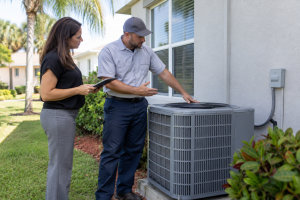
Pro Tip: If your HVAC company also services pool heaters, ask about scheduling your air conditioning maintenance and pool heater inspection during the same visit. It's an easy way to knock out two maintenance tasks with one appointment before you need a pool heater repairman and keep both systems ready for Florida's long cooling and swimming seasons.
Bonus: Scheduling both inspections together helps you catch small issues before they turn into expensive repairs.
Summer Swim Season: Run Your Pool Heater for Maintenance, Not Warmth
Your pool heater doesn't have to work hard during the summer, but it shouldn't be forgotten either. If your pool is already comfortable, there's no reason to spend money heating the water even more. Instead, focus on keeping the equipment itself in good shape.
Running your pool heater briefly once a week helps circulate water through the system, reduce moisture that can contribute to corrosion, and discourage spiders and other critters from settling inside. Pair that with a little routine maintenance, and you'll give your pool heater the best chance of staying reliable for years to come.
Sometimes the simplest maintenance habits have the biggest payoff. This summer, run your pool heater for maintenance, not warmth. That simple habit can help protect your investment, reduce the risk of unexpected repairs, and help ensure your pool heater is ready to go when Florida's cooler weather returns.
Resources
- Gas Pool Heaters. U.S. Department of Energy [Internet]. Accessed June 26, 2026. Available from: https://www.energy.gov/energysaver/gas-pool-heaters
- UltraTemp® High Performance Pool Heat Pump – An Energy-Efficient and Economical Way to Heat Pools and Spas. Pentair Pool [Internet]. Accessed June 26, 2026. Available from: https://www.pentair.com/en-us/pool-spa/products/heaters-heat-pumps/ultratemp-high-performance-heat-pump.html
- MASTERTEMP® POOL AND SPA HEATER Installation and User's Guide. Pentair [Internet]. Accessed June 26, 2026. Available from: https://www.pentair.com/content/dam/extranet/nam/pentair-pool/residential/heaters/mastertemp/manual/mastertemp-heater-manual-english.pdf