You've probably heard it before: "Replace your AC filter every month."
It's one of the most common pieces of HVAC advice homeowners receive, but is it always true? Not necessarily.
Most Florida homes really do need a new filter every 30 days. Others can safely go much longer. The right replacement schedule depends on your HVAC system, your household, and how hard your air conditioner works throughout the year.
Honestly, there isn't a one-size-fits-all answer.
ENERGY STAR recommends checking your return air filter every month during periods of heavy use, but many filters don't actually need to be replaced monthly.[1] The key is to inspect the filter regularly rather than relying solely on the calendar.
Why Your HVAC Air Filter Replacement Schedule May Vary
Your AC filter is designed to trap dust, pollen, pet dander, and other airborne particles before they reach your HVAC system. As the filter collects debris, airflow becomes more restricted.
A dirty filter reduces airflow, making your air conditioner work harder to circulate conditioned air throughout your home. According to the EPA, failing to change your air filter often enough not only restricts airflow but also allows dirt, dust, pet hair and mold to accumulate on the evaporator coil, making your system less efficient and reducing indoor air quality. [2]
Here in Florida, air conditioners often run for much of the year, so filters typically collect debris faster than they would in cooler climates. That means AC filters need to be changed more, but when?
A Good AC Filter Replacement Schedule for Most Florida Homes
Think of these timelines as a starting point, not a hard rule. Your HVAC air filter may need to be changed sooner or later, depending on how your home is used.
Instead of automatically replacing your filter every month, make it a habit to check it once a month. Then replace it when it looks dirty or when you've reached these general guidelines.
1-Inch Pleated Filters
During Florida's long cooling season, plan on replacing them about every 30 to 45 days. During the cooler months, they often last 45 to 60 days.
2- to 4-Inch Media Filters
These larger filters hold more dust and typically last 3 to 6 months, depending on your home's conditions and how often your system runs. You should still give them a monthly peek during periods of high cooling demand.
Don't Wait for the Calendar to Tell You It’s Time to Change Your AC Filters
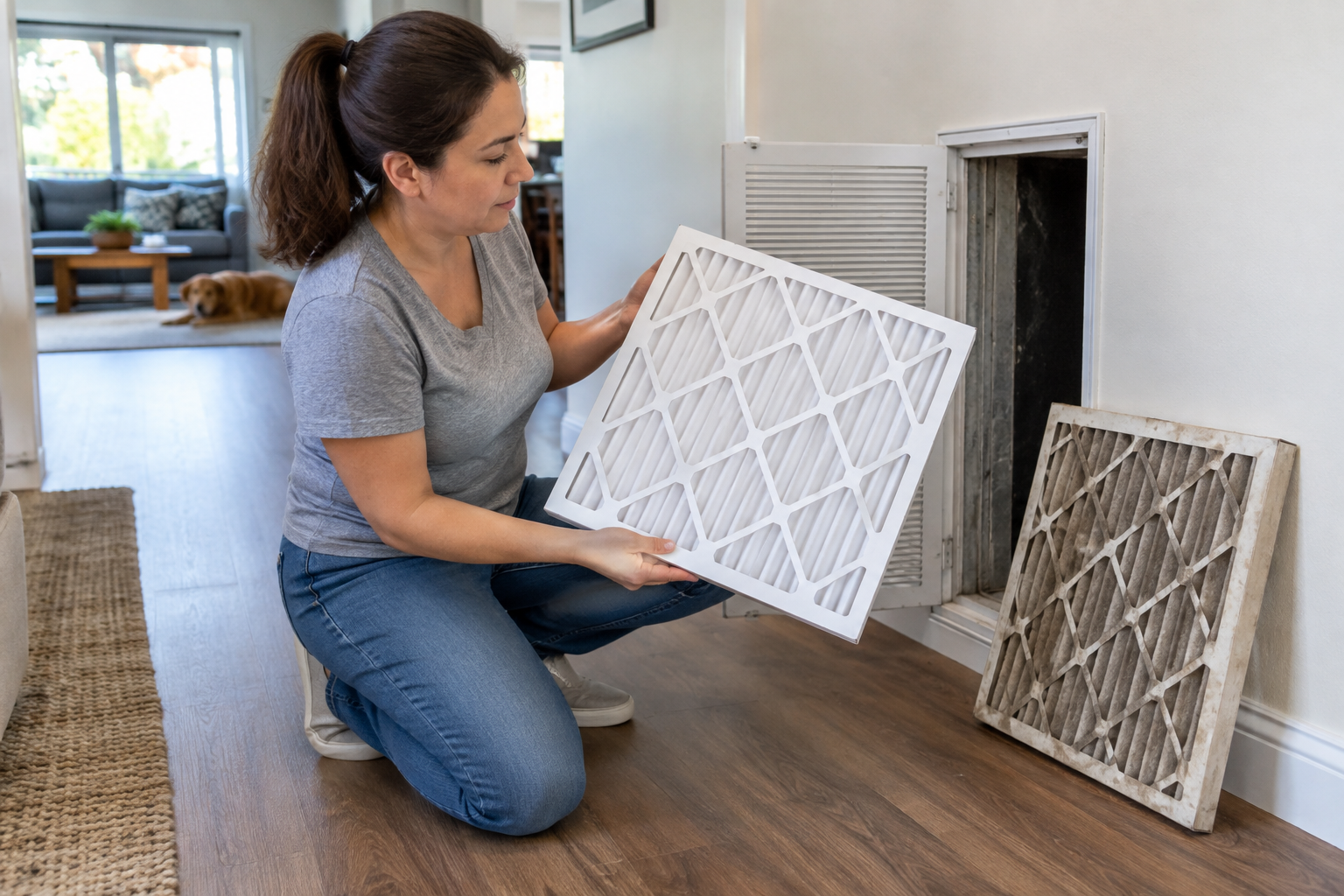
This can’t be said enough: check your return air filters monthly. Even if you haven't reached the date you set, replace your filter sooner if it looks loaded with dust, your AC is struggling to keep up, or your HVAC technician recommends a shorter schedule.
Some Homes Do Need Monthly Filter Changes
Every home is different. You can’t rely on the replacement timeframe or factors your neighbor or Sally at the office uses to determine when to swap out the old filter.
You may need to replace yours more often if any of these situations apply:
You Have Pets in Your Home
Fido and Fluffy bring a lot of joy to your home, but they also create extra work for your AC filter. Pet hair, dander, and the dirt they bring inside can load up a filter surprisingly fast. Add Florida's nearly year-round air conditioning season, and your HVAC system is pulling that debris through the filter day after day. If you have multiple furry family members, checking your filter monthly isn't optional—it's one of the easiest ways to protect your air conditioner. Most 1-inch filters in pet-friendly homes will need to be replaced about every 30 days.
Someone Living in Your Home Has Allergies or Asthma
If someone in your home struggles with allergies, asthma or other respiratory issues, your air filter becomes even more important. While your HVAC filter isn't a substitute for an air purifier or medical treatment, replacing it before it becomes clogged can help reduce the amount of dust, pollen, pet dander, and other airborne particles circulating through your home. A clean filter also helps maintain proper airflow, which is good for both your family and your HVAC system. [3]
Your Air Conditioner Runs Most of the Year
Unlike many parts of the country, Florida homeowners don't get much of a break from using their air conditioners. Your system may run for hours every single day, especially during the summer. The more air your HVAC system moves, the more dust, pollen, and other particles your filter captures. More runtime means more buildup of trapped dust, dirt and debris, leading to frequent filter changes.
Your Home Is Busy: High Traffic = Filter Clogging Debris
A full house means more than just extra laundry and dishes. Kids running in and out, family gatherings, frequent visitors, pets and everyday foot traffic all bring more dirt, dust, and debris into your home. Even opening the doors several times a day lets pollen and other outdoor particles find their way inside. If your home is always buzzing with activity, your air filter is probably working overtime too.
You're in the Middle of Home Remodeling or Renovation Projects
Home improvement projects create some of the toughest conditions for an HVAC filter. Drywall dust, sawdust, sanding debris, insulation fibers, and construction materials can clog a filter much faster than normal household dust. If you're remodeling, check your filter often. You may find yourself replacing it several times before the project is finished.
You Run Your AC’s Fan Continuously
Some homeowners like to leave the thermostat fan set to ON instead of AUTO to help keep temperatures more consistent throughout the house. That's perfectly fine, but remember that the blower motor is moving air through the filter 24 hours a day, not only during cooling cycles. More airflow means your filter collects debris faster, so you'll likely need to replace it sooner.
Part-Time Floridians: Your Home Is Vacant Part of the Year
If you're a seasonal resident or spend part of the year away from your Florida home, your filter may stay cleaner because your HVAC system isn't running as often. That doesn't mean you should forget about it, though. Check the filter when you return and continue inspecting it monthly while you're home. Even an empty house collects dust, and Florida's humidity can make regular HVAC maintenance even more important.
Check It Before You Change It: A Monthly Filter Check Helps You Find the Right Replacement Schedule
The calendar is only a guideline. Your filter tells the real story.
No magic number that works for every home. While the calendar provides a good starting point, your filter holds the truth…and the dirt, literally. A dirty, clogged AC filter can restrict airflow, make your air conditioner work harder to cool your home, and even increase your monthly energy bills.[1]
Taking just one minute each month to inspect your filter is one of the easiest ways to protect your HVAC system, maintain healthy airflow, and help prevent unnecessary wear and tear on your air conditioner.
If you're ever unsure which filter your system needs or how often it should be replaced, ask your HVAC technician during your next maintenance visit. They can recommend the right filter and replacement schedule based on your system, your household, and your lifestyle.
The goal isn't to replace your filter every month just because the calendar says so. It’s to replace it when it needs it.
And remember: when in doubt, change it out. A new filter costs far less than an unnecessary AC repair, and for most Florida homeowners, protecting their system starts with one simple habit: checking the filter every month. Set a reminder on your phone, take a quick peek at your filter, and keep a few replacements on hand so swapping one out is fast and easy. Your AC (and your wallet) will thank you!
Resources
- Heat & Cool Efficiently. ENERGY STAR [Internet]. Accessed June 24, 2026. Available from: https://www.energystar.gov/saveathome/heating-cooling
- Air Conditioner Maintenance. U.S. Department of Energy [Internet]. Accessed June 24, 2026. Available from: https://www.energy.gov/energysaver/air-conditioner-maintenance
- Guide to Air Cleaners in Your Home – 2nd Edition: Portable Air Cleaners, Furnace and HVAC Filters. EPA United States Environmental Protection Agency [Internet]. Accessed June 24, 2026. Available from: https://www.epa.gov/indoor-air-quality-iaq/guide-air-cleaners-home