Ductless mini-split systems are hot in the HVAC world right now. But they’re more than just a passing trend. Mini-splits are known for being efficient, flexible, quiet, and surprisingly powerful for their size. And let’s not forget the no-ducts part.
Whether you’re dealing with an older home, a tricky layout, or a space that was never meant to be conditioned, mini-splits give you options without tearing your home apart.
These systems aren’t just another way to cool your home. They’re designed to solve the kinds of comfort issues split systems struggle with. By delivering air directly into each space, they give you more control, less energy loss, and the flexibility to handle rooms and layouts that don’t fit the typical HVAC setup.
Which Areas Do Mini-Splits Work Best In?
Just because they can be used almost anywhere doesn’t always mean they should. There are specific situations where these systems really shine and can even outperform traditional central air.
Mini-split systems a more efficient way to cool spaces where classic central systems fall short. They also give you room-by-room control, so you’re not wasting energy cooling spaces you’re not even using. These systems fill in the gaps when your home, layout, or daily use doesn’t match the one-size-fits-all equipment most people are used to.
Instead of trying to force your home to fit a traditional air conditioning system, mini-splits adapt to how your space is actually used. That’s exactly why in certain real-life situations, they don’t just work. They stand out, like in these cases:
No Existing Ductwork? No Problem!
This is hands-down one of the most common (and smartest) uses for a ductless system. If your home was built without ductwork, think older homes, historic properties, or certain additions; installing ducts can be expensive and invasive. Retrofitting a home for ductwork often means opening walls, ceilings, and other areas. A mini-split skips all of that.
Instead, it delivers heating and cooling directly into the space, avoiding the energy losses that come with ductwork, which can account for more than 30% of energy use in some systems.[1] That means less construction, a faster install, and better efficiency right out of the gate.
Hot Upstairs, Freezing Downstairs?
If you’ve ever said, “Why is this room always hotter than the rest of the house?” you’re not alone. Conventional ducted systems can struggle to distribute air evenly, especially in larger homes or multi-story layouts.
Mini-splits solve that by creating zoned comfort, meaning cooling can be customized for each space. So instead of constantly adjusting the thermostat, you can keep bedrooms cooler at night, fine-tune temperatures room by room, and avoid wasting energy on spaces you’re not using.
And that zoning capability isn’t just about comfort. It’s also a big reason why mini-splits can be so energy-efficient.[2]
Converted Garage or New Addition?
This is where ductless systems really prove their value. If you’ve added a room, enclosed a patio, converted a garage, or finished a bonus space, your existing HVAC system probably wasn’t designed to handle that extra square footage.
Trying to extend ductwork into these areas can get complicated fast. It’s expensive, invasive, and doesn’t always fix the problem, especially if your system wasn’t sized for the extra load.
Instead of overworking your main system or dealing with uneven temperatures, you can give that space its own dedicated comfort control.
Mini-Split setups are especially ideal for:
- Sunrooms
- Garage conversions
- Home gyms or offices
- Detached workshops or sheds
- Converted attics or basements
According to the U.S. Department of Energy, ductless systems are a practical solution for spaces that aren’t connected to central ductwork or need independent temperature control.[3]
Smarter Way To Cool a Part of Your Home
Not every home needs a full ducted system, and not every situation calls for replacing what you already have. Mini-splits are a great fit for smaller homes, apartments, guest houses, in-law suites, or even as a way to supplement your existing HVAC system. Instead of cooling your entire home when you only need one or two areas, you can target specific spaces and keep your main system from working overtime.
When a Mini-Split Might Not Be the Best Fit
Mini-splits are incredibly versatile, but they’re not the perfect solution for every home—and it’s worth knowing where they may fall short.
They may not be ideal if:
- You want to condition a large, open floor plan with a single unit
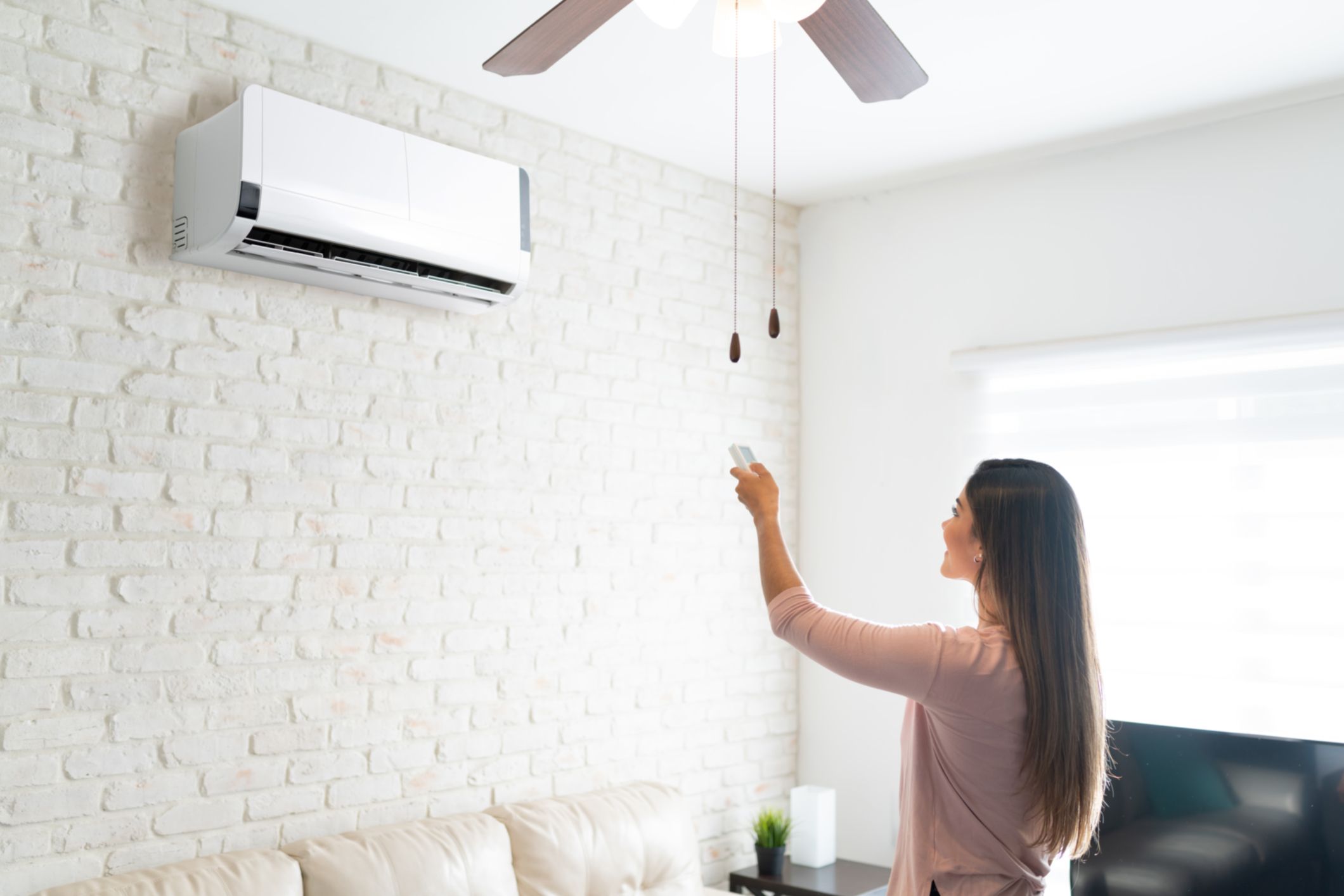
- You prefer a completely hidden system (indoor units are visible on walls or ceilings)
- Your home already has well-designed, efficient ductwork in place
- You’re trying to cool the entire home but want a single, centralized control system
In those cases, a central AC system or a hybrid approach might make more sense. Many homeowners use mini-splits alongside central systems to address specific comfort issues without replacing the entire system. Explaining your goal and budget to your HVAC technician will help them determine which option best fits your scenario.
Mini-Splits Instead of Window AC Units
When relying on window AC units to cool parts of your home, chances are your home either doesn’t have ductwork or central air. They are simple to install, but they’re noisy, inefficient, and not exactly great to look at.
Replacing window shakers is where ductless systems really stand out. You get quieter operation, better energy efficiency, and consistent comfort without blocking your windows or dealing with that constant on-and-off cycling.
If you’ve been thinking about upgrading, moving from window units to a ductless system is one of the simplest ways to improve comfort without a full system overhaul.
Pro Tip: It’s the unconventional spaces that benefit most. Attic bedrooms, workshops, garage conversions, additions, and heritage homes are strong candidates for mini-splits. The rooms that never cool right or weren’t built with HVAC in mind are where you’ll see the biggest impact.
Should You Opt For a Ductless Mini-Split Unit?
Ductless mini-splits aren’t a one-size-fits-all solution. But in the right situation, they can be one of the smartest upgrades you make. If your home doesn’t have ductwork, has rooms that never seem to stay comfortable, or includes additions, garage conversions, or other spaces that weren’t designed with HVAC in mind, this type of system can help. It gives you a practical way to improve comfort without overhauling everything.
They’re also a great choice if you want more control over your cooling and energy use without replacing what’s already working.n The biggest advantage is flexibility. You can improve comfort exactly where you need it, without committing to a full system replacement.
Not sure what makes the most sense for your space or if a mini-split is a worthwhile investment? You don’t have to figure it out on your own. A trusted HVAC professional can walk through your home, see how you actually use each area, and help you choose what works best.
Resources:
- Ductless Mini-Split Air Conditioners. U.S. Department of Energy [Internet]. Accessed April 26, 2026. Available from: https://www.energy.gov/energysaver/ductless-mini-split-air-conditioners
- Ductless Heating and Cooling. Energy Star – ePA [Internet]. Accessed April 26, 2026. Available from: https://www.energystar.gov/products/ductless_heating_cooling
- Heat Pump Systems. U.S. Department of Energy [Internet]. Accessed April 26, 2026. Available from: https://www.energy.gov/energysaver/heat-pump-systems
- Heat Pumps. United States Environmental Protection Agency – EPA [Internet]. Accessed April 26, 2026. Available from: https://www.epa.gov/burnwise/heat-pumps