Summer heat puts heavy demands on your air conditioning system. So when your home never seems to cool evenly or your AC runs constantly but still struggles to keep up, you start wondering what’s going on.
Is one system enough? In some homes, it is, but in others, one just isn’t enough. Two units aren’t just for huge homes or luxury builds. In some cases, it’s the most practical way to maintain a consistently comfortable home, especially in hot, humid climates.
But when is more than one unit the answer?
Are Two HVAC Systems Better Than One?
A single AC system works best when it can evenly distribute air throughout the entire home. That’s easier in smaller, single-story layouts with open floor plans. But once you add more complexity to the home, it becomes harder for a single system to do the job well.
Even “big enough” units may struggle to cool every part of the home evenly. And trying to force it usually leads to hot spots, uneven temperatures, an overworked system and higher electric bills.
Signs That One AC System Isn’t Enough for Your Home
So how do you know when your system is actually falling short? It usually shows up in ways you can feel—and in what your system is doing day to day.
These are the situations where problems usually start to show up:
Multi-Level Homes
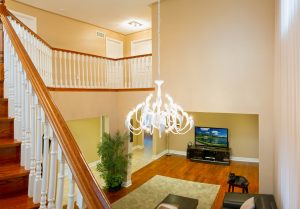
Have you noticed that your upstairs is hot, no matter how cold it gets downstairs? Two-story and multi-level homes naturally have different cooling demands from floor to floor. Heat rises, and the upper levels absorb more heat from the roof and attic, making it harder for a single system to keep everything balanced.
Large Square-Foot Homes
Even without a second floor, homes with a lot of square footage can be difficult to cool efficiently. The farther the air has to travel, the harder it is to maintain consistent temperatures from one end of the house to the other.
Long or Complicated Ducts
Does your home have long hallways, lots of rooms, or a larger layout? Some homes just aren’t designed for efficient air conditioning, and ductwork can feel like a maze. When ducts have to stretch long distances or navigate a complex layout, airflow can weaken before it reaches certain rooms. That leads to uneven cooling and spaces that don’t fully remove humidity, leaving them feeling warm and uncomfortable.
Separate or Closed-Off Spaces
Does your home have divided living spaces that just stay warm? Homes with split floor plans, additions, mother-in-law quarters or bonus rooms that stay closed off don’t always get the same airflow as open areas. One system trying to serve all of those spaces evenly can fail.
Upgrading to a Bigger AC Unit Instead of a Second System
A common misconception is that you can just install a bigger AC unit instead of adding a second one. But bigger doesn’t mean better when it comes to HVAC. Oversized systems tend to have a short cycle, meaning they turn on and off quickly without running long enough to remove humidity or properly cool the home. That’s a bigger problem in Florida, where humidity control is just as important as temperature.[1]
On the flip side, an undersized system will run nonstop and still struggle to keep up. Proper system design is about balance, not just capacity.
Drastic Temperature Differences Between Areas
Does everyone in your home avoid or complain about specific rooms? If one part of your home is consistently warmer than another, like upstairs vs. downstairs or one side of the house vs. the other, it’s a strong sign your system isn’t keeping up with the way your home is laid out.
High Energy Bills from an Overworked System
Even if you’ve missed or ignored all the other symptoms of a struggling air conditioner, more dollar signs are usually a pretty clear sign that something’s off. When an AC unit tries to do too much, it often runs longer and harder than it should. That extra strain shows up in your energy bills—and over time, it can wear down your system faster than expected.[1]
HVAC Zoning vs. Two Units
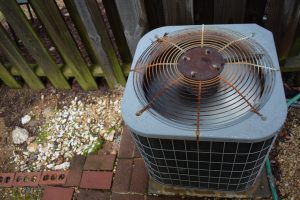
Before jumping to a second system, some homes can benefit from zoned areas. Zoning divides your home into separate areas, each with its own thermostat, using ductwork dampers to control airflow to different parts of the home.
But zoning has limits. If your system is already maxed out or your home has significant heat-gain differences between areas, zoning alone may not be enough. That’s when a second AC unit becomes the better solution.
Are Mini-Splits an Alternative to a Second Unit?
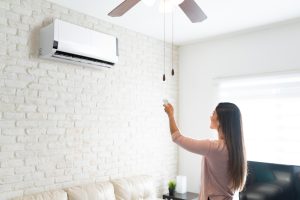
If your issue is limited to one area, such as an upstairs bedroom, an addition, or a converted space, a ductless mini-split can be a smart alternative. Instead of installing a full second system and revamping ductwork, a mini-split can handle that specific space and take the load off your main AC. This type of targeted cooling approach is often recommended when extending or modifying duct systems isn’t practical or efficient.[2]
When Installing a Second AC Unit Makes Sense for Your Home
Here are some of the most common situations where adding a second system is worth considering:
- Your upstairs is consistently warmer than your downstairs
- Your home is over 2,000–2,500 square feet
- You have a two-story or multi-level layout
- Your current system runs constantly, but still struggles
- You’ve already addressed airflow, insulation, and duct issues
- You want more control over temperatures in different areas
Are Two AC Units Worth The Investment?
Unfortunately, there is no one-size-fits-all air conditioning solution. Adding a second AC system is a significant investment, but in the right home, it can make a real difference in how comfortable your space actually feels.
Instead of one unit working overtime trying to cool everything, each system handles a smaller, more manageable area. That usually means more consistent temperatures, better humidity control, and less wear on your equipment.
That said, two systems aren’t always the first or only solution. In some homes, improving airflow, adding zoning, or using a targeted option like a mini-split can solve the problem without a full system upgrade.
What it really comes down to is how your home is laid out, how heat moves through it, and whether your current system can realistically keep up.
Some homes do just fine with one well-designed system. Others don’t. That’s where a second unit starts to make sense. It’s not about how many AC units you have. It’s about having a sustainable setup that actually works—keeping your home consistently cool from one room to the next, even in the middle of a South Florida summer.
Resources:
- Central Air Conditioning. U.S. Department of Energy [Internet]. Accessed April 26, 2026. Available from: https://www.energy.gov/energysaver/central-air-conditioning
- Winkler J. Laboratory Test Report for Fujitsu 12RLS and Mitsubishi FE12NA Mini-Split Heat Pumps – Building Technologies Program. U.S. Department of Energy [Internet]. Published September 2011. Accessed April 26, 2026. Available from: https://www.nrel.gov/docs/fy11osti/52175.pdf