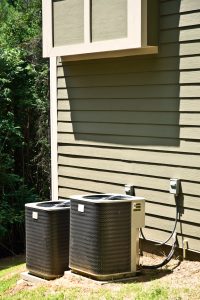
When it comes time to replace your old air conditioning system, many homeowners might consider a larger unit, believing that more cooling power will lead to greater comfort. However, this notion can be misleading. In HVAC terminology, “size” refers not only to physical dimensions but also to the system’s capacity to cool a space effectively.
Choosing an oversized air conditioner can lead to inefficiencies and discomfort in your home’s temperature regulation. In this article, we will explore what determines the proper size of your air conditioning system and how to accurately assess your home’s needs.
AC Size Doesn’t Actually Mean Physical Size
When contractors talk about “size,” they’re not talking about how big the unit looks. They’re talking about cooling capacity, measured in tons (1 ton = 12,000 BTUs per hour). So, if you go from a 2-ton system to a 3-ton AC, it isn’t physically bigger like a shoe size. It just moves more heat out of your home per hour.
This is also where efficiency ratings come in:
- SEER / SEER2 = seasonal efficiency over time
- EER2 = efficiency at specific conditions
These ratings matter for energy use, but they don’t determine whether the system is properly sized for your home. That’s a separate calculation entirely.[1]
Why “Bigger Is Better” Backfires in Residential HVAC Systems
It’s easy to think a larger AC will cool your home faster and fix everything your old system struggled with. But when an air conditioner is oversized, it actually short cuts the very process that makes your home comfortable.
Here’s what really happens:
An oversized system blasts cold air and quickly satisfies the thermostat, but it shuts off before it can finish its job. Cooling isn’t just about temperature.
Your AC is also responsible for:
- Pulling humidity out of the air (a big deal in South Florida)
- Circulating air evenly throughout the home
- Running long enough cycles to stabilize indoor comfort
When the system is too large, it skips those longer, steadier cycles.
That’s when homeowners start noticing things like:
- Clammy, sticky air even when the thermostat says it’s “cool.”
- Hot and cold spots from room to room
- The system is turning on and off constantly (short cycling)
- More strain on components from frequent starts and stops
Short cycling doesn’t just affect comfort; it can shorten your system’s lifespan and lead to more frequent repairs.
This is one of those situations where the home might technically reach the set temperature, but it is never quite right. Oversizing is actually one of the most common HVAC installation issues done by technicians who lack proper installation knowledge and is directly tied to comfort complaints and performance problems. [2]
Too Small: Undersized Systems Have Their Own Problems
Going smaller doesn’t fix the issue either, and in some cases, it creates a different kind of frustration. An undersized AC simply can’t keep up with your home’s cooling demand, especially during the hottest parts of the day. Instead of cycling the way it should, it runs longer and harder, trying to catch up.
That often looks like a system that’s constantly running, higher energy bills, and a home that still doesn’t feel consistently comfortable, especially in certain rooms. At that point, it’s not just inefficient; it’s exhausting for your system and your wallet.
The goal isn’t to go bigger or smaller. It’s about getting a system that’s properly matched to your home so it can run efficiently, keep up with demand, and keep you comfortable.
How Is AC Size Actually Determined?
It’s not a guess. HVAC pros use a process called a Manual J load calculation, developed by ACCA and recognized by ANSI as an industry standard.[3, 4] Manual J looks at how your home gains and loses heat. It’s the gold standard for sizing, and it goes way beyond just square footage.
Here’s what actually gets evaluated:
Square Footage (Only the Starting Point)
Yes, your home’s size matters, but it’s just the baseline, not the standard. Two homes with the same square footage can have completely different cooling needs depending on everything else below.
Your Home’s Insulation Levels
How well your home holds conditioned air makes a huge difference. Older insulation, missing insulation, or upgraded materials can all change how much cooling your home needs.
Your Home’s Window Size, Type, and Direction
Have you ever touched a westward window midday? It’s hot. Your windows are one of the biggest sources of heat gain. Large windows, older glass, and direct sun exposure (especially west-facing) can significantly increase your cooling load.
Sneaky Air Leaks and Poor Sealing
Gaps, cracks, and poorly sealed areas let hot, humid air sneak in. The more air leakage there is, the harder your AC has to work to keep up.
Ceiling Height and Vaulted Spaces
Tall ceilings are aesthetically appealing but mean more air volume to cool. Vaulted ceilings and open-concept spaces can also increase demand on your system.
Condition of Your Existing Ductwork
Leaky, undersized, aging or poorly designed ductwork can impact how effectively cooled air reaches each room. These symptoms also affect your system’s overall performance.
How Many People Live in Your Home
People generate heat. More people in your home mean more internal heat load for your AC to handle.
Local Climate (Hello, South Florida!)
Your system isn’t just sized for temperature; it’s sized for humidity, too. In South Florida, that constant moisture load plays a major role in how your system should be designed.
Does What Your Home Is Built From Affect AC Size?
Yes, the type of building material matters, but it’s often overlooked.
Different construction types handle heat differently:
- CBS/block homes (common in South Florida) hold and release heat differently than wood-framed homes
- Wood frame homes may heat up and cool down faster, depending on the insulation
- Manufactured homes often have different insulation materials and air leakage rates
Even upgrades like new windows, added insulation, or sealing up drafts can significantly change your cooling load.
South Florida Weather Changes Everything Cooling-Related
Sizing an AC in South Florida isn’t the same as sizing one in a dry climate. Here, your system isn’t just cooling the air; it’s also constantly removing humidity. That’s why longer run times are actually a good thing. When your system runs steadily, it has time to pull moisture out of the air, which is what makes your home feel comfortable, not just cooler. A properly sized system balances both temperature and humidity, while an oversized unit cools too quickly and shuts off before it can perform deeper dehumidification.
The result? Air that technically hits the set temperature but still feels damp or sticky. In this climate, comfort isn’t just about degrees on the thermostat. It’s about controlling humidity just as much as temperature.
ENERGY STAR notes that properly sized systems run longer cycles and remove humidity more effectively, while oversized systems can leave indoor air damp and uncomfortable. [1, 5]
Do Ductless Mini Splits Need Proper Sizing, Too?
If you’re replacing a central AC, you might also hear about ductless mini-splits. They’re often used for additions, converted garages, or rooms that never seem to cool evenly. They’re not a one-size-fits-all fix, though. Mini-splits still require proper sizing, and yes, Manual J still applies. Even without ductwork, the system has to be matched to the space, or you can run into the same issues with humidity, uneven temperatures, or short cycling.
How Do You Know You’re Getting the Right Size Air Conditioner?
If you’ve ever wondered how to choose the right AC size, this is where the details really matter.
Here’s what to look for when replacing your AC:
- A contractor performs a Manual J calculation (not just eyeballing it)
- They ask about insulation, windows, and air flow, not just square footage
- They evaluate your ductwork, not just the unit
- They talk about humidity control, not just temperature
If someone immediately recommends “going bigger,” that’s your cue to ask more questions.
How Do I Make Sure My New AC Is the Right Size?
If your old system struggled, it doesn’t automatically mean you need a bigger one. In many cases, the issue isn’t capacity; it’s how the system was sized and installed in the first place. It may have been mismatched to your home from day one, installed without a proper load calculation, or working against ductwork and airflow problems that were never addressed.
When you don’t look at the whole picture, even a brand-new, larger unit won’t fix the root problem; it just changes how the discomfort shows up.
The goal isn’t to go bigger. It’s to get a system that actually fits your home’s specifications and how it performs day-to-day. When everything is sized correctly and working together the way it should, you’ll notice the difference almost immediately. The air feels balanced, the humidity is under control, and your home stays consistently comfortable without the system constantly fighting to keep up.
And that’s the real win. Not just a cooler house, but one that finally feels just right.
Resources:
- Importance of Air Conditioning. U.S. Department of Energy [Internet]. Accessed March 26, 2026. Available from: https://www.energy.gov/energysaver/air-conditioning
- Residential HVAC Installation Practices: A Review of Research Findings. U.S. Department of Energy [Internet]. 2018. Accessed March 26, 2026. Available from: https://www.energy.gov/cmei/buildings/articles/residential-hvac-installation-practices-review-research-findings
- Manual J® Residential Load Calculation (8th Edition – Full). Air Conditioning Contractors of America (ACCA) [Internet]. 2016. Accessed March 26, 2026. Available from: https://www.acca.org/standards/technical-manuals/manual-j
HVAC load calculator. FieldVibe [Internet]. Accessed March 26, 2026. Available from: https://www.fieldvibe.com/manual-j-calculation-simple-hvac-load-calculator - Manufactured Home Cooling Equipment Sizing Guidelines. Energy Star [Internet]. Accessed March 26, 2026. Available from: https://www.energystar.gov/sites/default/files/asset/document/SizingGuidelines_0.pdf