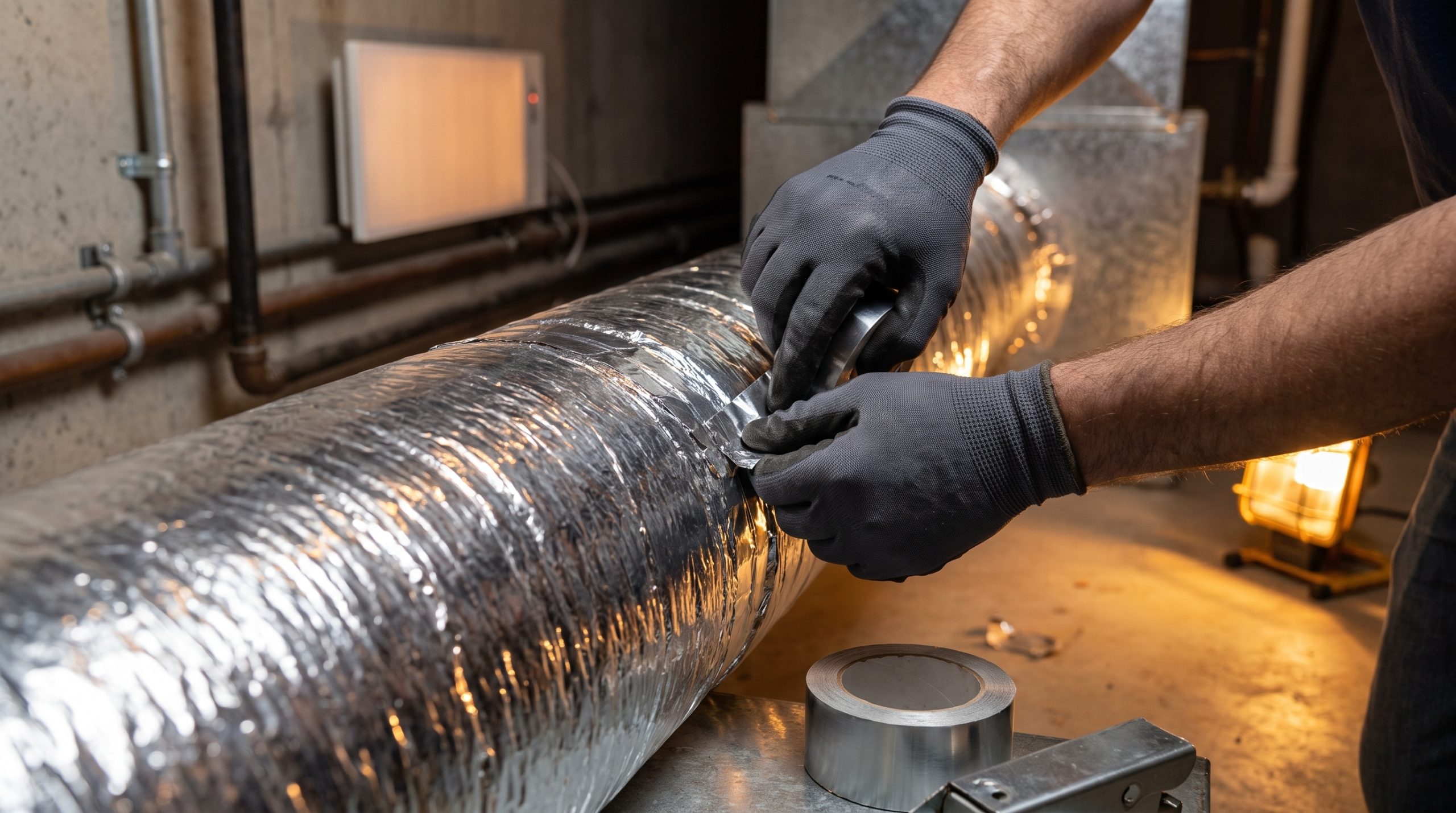
Most homeowners think about the air conditioner itself when comfort problems start showing up. But sometimes the problem is not the AC unit at all. The sneaky cause is hidden in the attic, walls, or crawl spaces. The culprit? Your AC ducts.
Your home, like most in South Florida, has a central air conditioning system. These systems rely on air ducts to distribute conditioned air throughout your living space, but they don’t last forever. They are finite products that succumb to age, use and other factors.
Ducts aren’t replaced often, but they can last a decade or more before issues such as deteriorating materials make them inefficient. Proper maintenance, duct sealing, and other ductwork services can help ducts last longer. But knowing when you need AC duct replacement is important.
How to Tell Your HVAC System Needs New Ductwork
When ductwork starts to break down, leak, or become contaminated, it can affect comfort, indoor air quality, humidity levels, and energy efficiency. In Florida, where air conditioners run year-round, duct systems often experience more wear and tear than many homeowners realize.
So, how do you know if your AC ducts need to be replaced instead of repaired or cleaned?
When Your Home Starts Feeling Less Comfortable
If certain rooms stay hot while others feel comfortable, or if airflow seems weak from some vents, damaged ductwork could be restricting airflow. Leaks, disconnected sections, crushed flex ducts, or deteriorating insulation can all make it harder for conditioned air to reach where it needs to go.
According to ENERGY STAR, the average home loses 20% to 30% of conditioned air through leaks, holes, and poorly connected ductwork, which means cooled air may end up in the attic instead of your living space.[1]
One of the biggest warning signs is uneven temperatures throughout the house.
Is it Time for New Ducts? Common Symptoms of Failing Ductwork
Ductwork problems are not always obvious. In many cases, homeowners notice small comfort, air quality, or efficiency issues long before they realize their duct system is part of the problem. Here are some of the most common signs that it may be time to consider duct repair or replacement.
Your Home Feels More Humid Than It Should
Air conditioners do more than cool the air. They also help remove excess humidity from your home. Leaking or damaged ductwork can reduce system performance and make it harder to maintain comfortable indoor humidity levels. If your home feels clammy even when the AC is running, your duct system could be part of the problem.
Higher Energy Bills Without Another Explanation
Are your utility bills increasing, but your AC system appears to be running normally? Leaky ductwork may be wasting cooled air before it ever reaches your living spaces. Duct leaks can significantly increase heating and cooling costs, especially when ducts pass through unconditioned spaces like attics.[2]
Your Home is Excessively Dusty
This is not a comment on your housekeeping skills, but if you constantly find yourself dusting furniture, cleaning vents, or changing filters more often than expected, your duct system could be contributing to the problem. Leaky return ducts can pull dust, insulation particles, attic debris, and other contaminants into the HVAC system and distribute them throughout your house.[2]
Musty Odors or Mold Concerns
A musty smell coming from your vents is never something to ignore. Florida's humidity can be tough on ductwork, and condensation, air leaks, damaged insulation, or moisture intrusion can create conditions that allow mold growth to develop inside or around the duct system. In some cases, homeowners notice an earthy or damp odor long before they discover visible signs of mold or moisture damage.
The EPA says that wet or mold-contaminated fiberglass duct materials often cannot be effectively cleaned and may require replacement, particularly when mold has penetrated porous insulation materials. [3]
Visible Damage in the Attic
Many Florida homes use flexible ductwork in the attic. Over time, extreme heat and humidity can cause duct materials to deteriorate. Sagging sections, crushed ducts, torn vapor barriers, disconnected runs, and damaged insulation can all affect airflow and system performance.
Strange Noises Coming From Your Vents
Rattling, banging, clanking, or whistling sounds coming from your vents are worth paying attention to. These noises can point to loose duct connections, air leaks, or damaged sections of ductwork. While a minor issue may be repairable, multiple problem areas throughout the system could mean replacement is the better long-term solution.
Your Ductwork Is Getting Up There in Age
Ductwork does not last forever. According to ASHRAE, residential ductwork has a median service life of about 30 years.[4] However, many Florida HVAC professionals recommend having ductwork evaluated after about 10 to 15 years, with 20 years often considered the upper end of a reasonable lifespan for well-installed, properly maintained systems. Florida's extreme attic temperatures, high humidity, and nearly year-round air conditioner use can accelerate wear and tear compared to other parts of the country. If your ductwork is getting older and you're noticing hot and cold spots, weak airflow, excessive dust, or rising utility bills, it may be time for a professional inspection.
Can I Just Have My AC Ducts Cleaned Instead?
Unfortunately, no. Duct cleaning can sometimes be beneficial when there is excessive dust buildup, pest activity, or visible contamination. Cleaning is not a solution for damaged, old or leaky ductwork.
Ducts that are torn, disconnected, deteriorating, collapsing, holding moisture, or contaminated with mold inside insulated materials cannot be fixed with cleaning alone. Duct cleaning does not correct issues such as damaged ducts, air leaks, or moisture problems, and mold-contaminated fiberglass duct materials may require replacement instead.[3]
Is It Better to Repair My Damaged Ductwork?
Sometimes the answer is yes.
Minor air leaks, loose connections, damaged joints, or insulation issues can often be repaired. In fact, sealing and insulating ductwork may significantly improve comfort and efficiency when the overall system is still in good condition. ENERGY STAR reports that sealing ducts can improve HVAC performance while reducing energy waste.[1]
If your duct system is older, heavily damaged, poorly designed, contaminated, or experiencing widespread deterioration, replacement may be the more cost-effective long-term solution.
Do You Need New HVAC Ducts or Just Repairs?
The answer depends on the overall condition of your ducting.
Minor air leaks, loose connections, damaged insulation, and isolated problem areas can often be repaired. If your ductwork is older, experiencing widespread deterioration, suffering from multiple leaks, or contributing to ongoing comfort and efficiency issues, replacement may be the better long-term investment.
A professional duct inspection can evaluate airflow, duct leakage, insulation condition, and overall system performance to determine the most cost-effective solution. Sometimes a targeted repair is all that's needed. Other times, new ductwork can improve airflow, indoor air quality, energy efficiency, and comfort throughout the home.
Thankfully, deciding between duct repairs and new ductwork isn't a coin toss. Your HVAC technician will help you determine whether repairs will solve the problem or if it's time to consider new ducts.
Resources
- Duct Sealing. Energy Star [Internet]. Accessed May 27, 2026. Available from: https://www.energystar.gov/saveathome/heating-cooling/duct-sealing
- Minimizing Energy Losses in Ducts. U.S. Department of Energy [Internet]. Accessed May 27, 2026. Available from: https://www.energy.gov/energysaver/minimizing-energy-losses-ducts
- Should You Have the Air Ducts in Your Home Cleaned? EPA [Internet]. Accessed May 27, 2026. Available from: https://www.epa.gov/indoor-air-quality-iaq/should-you-have-air-ducts-your-home-cleaned
- ASHRAE Equipment Life Expectancy chart. Natural Handyman [Internet]. Accessed May 27, 2026. Available from: https://www.naturalhandyman.com/iip/infhvac/ASHRAE_Chart_HVAC_Life_Expectancy.pdf