UV-C light (the type used in HVAC air purification systems) can damage mold at a cellular level, making it harder for spores to grow and spread. But whether it actually “kills” mold in your home or workplace depends on several real-world factors such as placement, exposure time, and whether the underlying moisture problem has been addressed.
How Germicidal Ultraviolet-C Lights Work Against Mold in Your AC Unit
UV-C light is a specific wavelength of ultraviolet radiation designed to disrupt the DNA of microorganisms like mold, bacteria, and viruses. When mold spores are exposed to enough UV-C energy, they lose their ability to reproduce and spread.
In HVAC systems, UV lights are typically installed near the evaporator coil or inside the air handler, where moisture tends to collect. That matters because mold thrives in dark, damp environments, and your AC system can unintentionally create the perfect conditions for growth.
According to the EPA, UV radiation can inactivate mold under the right conditions, particularly when exposure is direct and consistent.[1]
Why UV Light Doesn’t Always “Kill” Mold Completely
Expectations need to be realistic: UV light won’t eliminate every microbe.
UV-C light works best when mold is directly exposed for a sufficient amount of time. But in a moving air system, spores don’t always linger long enough under the light to be fully neutralized.
This is where most people get tripped up. UV light can work, but only if a few key things are working in your favor.
Bulb Intensity and UV Type Matter More Than People Think
Not all UV bulbs are created equal. Lower-output lights may not deliver enough germicidal energy to effectively disrupt mold spores, especially in larger systems or high-moisture environments.
For HVAC use, systems typically rely on UV-C light around 254 nm, which is the most effective range for damaging microbial DNA. Stronger output and proper placement help ensure surfaces like coils get consistent exposure. And keep in mind that UV bulbs lose strength over time, even if they still light up, so regular replacement is important.[2]
UV Exposure Time Is Everything
UV-C doesn’t work instantly. Mold needs consistent exposure to light to be neutralized, which is why fast-moving air inside ductwork limits its effectiveness.
In real-world HVAC systems, airborne particles often pass by the light too quickly to receive a strong enough dose. That’s why UV tends to work better on surfaces, like coils, where mold is exposed to continuous light over time rather than a quick pass-through.
This difference between “dose over time” and brief exposure is a major reason results can vary across systems.[2]
UV-C Light Placement Can Make or Break the Process
Where the light is installed matters just as much as the light itself. Systems placed near the evaporator coil tend to be far more effective than those installed farther down the ductwork.
That’s because coils and drain pans are some of the dampest areas in your system, making them prime spots for mold growth.
Targeting these areas allows UV light to work where it’s actually needed, rather than trying to treat constantly moving air. When UV is installed too far from these moisture-prone zones, its impact drops off quickly.
Airflow Speed Plays a Role
The faster the air moves through your system, the less time mold spores are exposed to UV light. That means less opportunity for the light to do its job.
In systems with higher airflow, this reduced contact time can significantly limit the effectiveness of UV in treating airborne contaminants. Slower-moving air and stationary surfaces allow for a higher UV dose, which is why surface applications tend to perform more consistently.
UV Light Only Works Where It Shines
UV-C is a line-of-sight technology. If mold is hiding behind insulation, deep in ductwork, or inside porous materials, the light won’t reach it.
This is one of the biggest limitations homeowners don’t realize. UV light can’t penetrate through dust, debris, or solid materials, so anything “shielded” from the light remains unaffected. According to the EPA, UV can inactivate mold when it directly reaches it, but it won’t address hidden growth or contamination outside of its direct path.[1]
So to answer the original question—yes, UV light can help control mold growth, but it’s not a magic, whole-home or workspace solution.
The Role of UV-C Lighting in Indoor Air Quality
UV-C systems perform best when used as a preventive and maintenance tool, not as a standalone fix.
In both residential and commercial HVAC applications, they’re especially helpful for:
- Keeping evaporator coils cleaner
- Reducing microbial buildup in drain pans
- Improving airflow by limiting biofilm accumulation
UV lights help prevent your HVAC system from becoming a source of mold in the first place.
That’s why they’re often recommended alongside other indoor air quality upgrades such as whole-home air purification systems or hospital-grade HVAC applications.
If You Already Have Mold, UV Light Isn’t Enough
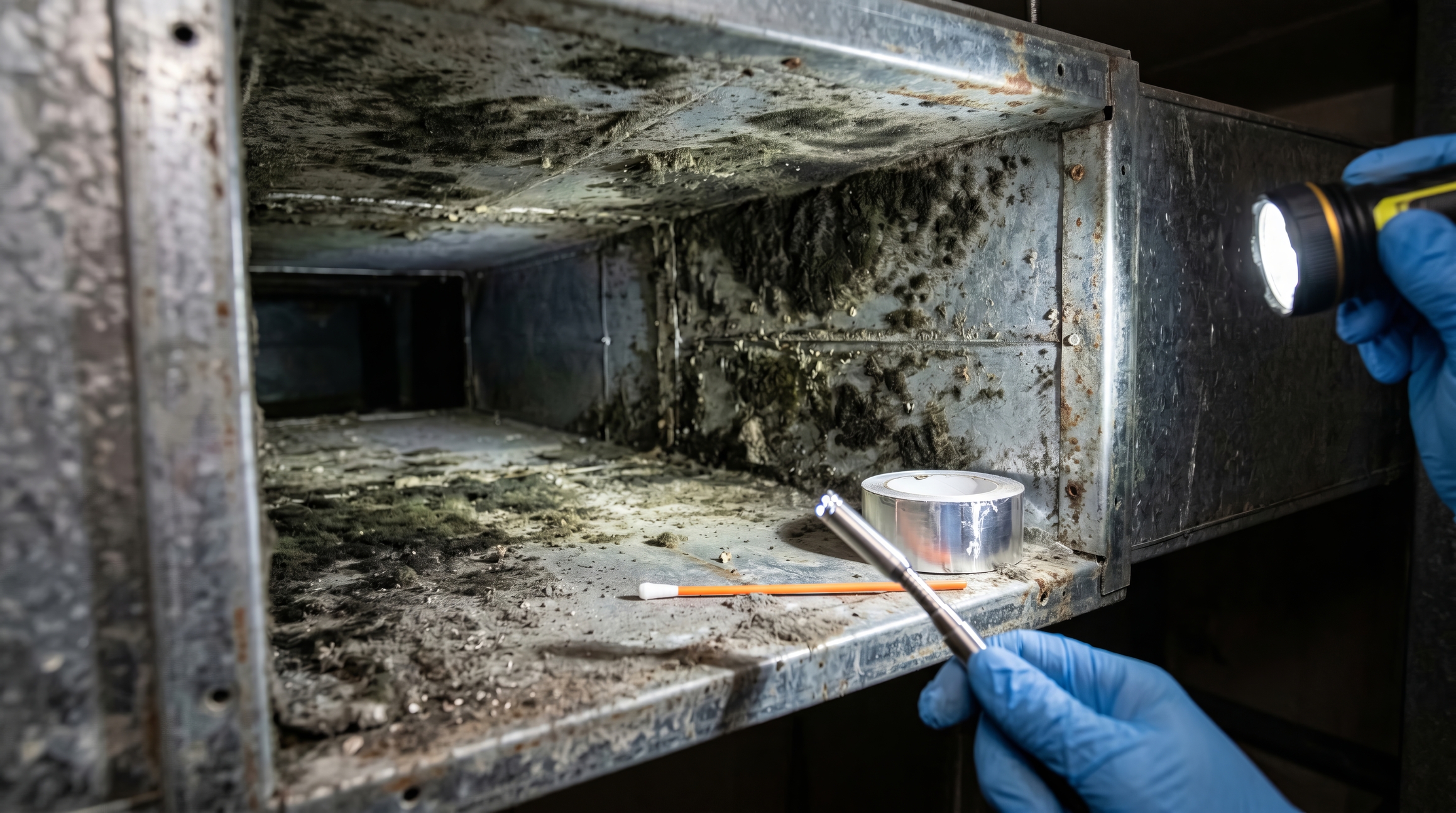
Many individuals overlook a critical aspect of mold remediation. If there is an active mold issue in your residence, whether it is in walls, insulation, ductwork, or around water leaks, ultraviolet (UV) light alone will not effectively address the problem.
The EPA is very clear on this: mold issues must be addressed at the source, which almost always means fixing moisture problems first.[3]
That could include:
- Repairing leaks or condensation issues
- Improving ventilation
- Removing contaminated materials
- Cleaning affected surfaces properly
UV light can help limit future growth, but it doesn’t replace proper mold remediation.
When UV-C Lights Actually Work for Mold Control in HVAC Systems
For most commercial and residential customers, UV light for mold in air conditioners is most effective with the right setup and realistic expectations.
UV-C lights can:
- Help prevent mold from growing inside your HVAC system
- Reduce buildup on key components
- Support cleaner airflow throughout your home
- Offer benefits like minimal maintenance, no chemicals and eco-friendly operation
They work best as part of a bigger strategy, not a standalone fix.
If you’re considering adding UV to your system, it’s worth discussing placement, bulb type, and how it fits into your overall indoor air quality plan.
UV light can absolutely help reduce mold inside your HVAC system, but it’s not a cure-all. They work best when they’re installed correctly, paired with good airflow, and most importantly, when moisture issues are under control.
The goal isn’t just to “kill mold.” It’s to remove what’s feeding it and make it harder for it to come back in the first place. Because if you don’t fix the conditions that allow mold to grow, no technology—UV or otherwise—is going to solve the problem long term.
Resources:
- Does ultraviolet (UV) radiation from UV lamps kill mold? United States Environmental Protection Agency – EPA [Internet]. Accessed March 18, 2026. Available from: https://www.epa.gov/mold/does-ultraviolet-uv-radiation-uv-lamps-kill-mold
- ULTRAVIOLET LAMP SYSTEMS – ASHRAE Handbook—HVAC Systems and Equipment. ASHRAE American Society of Heating, Refrigerating and Air-Conditioning Engineers [Internet]. 2020:17. Accessed March 18, 2026. Available from: https://www.ashrae.org/file%20library/technical%20resources/covid-19/i-p_s20_ch17.pdf
- A Brief Guide to Mold, Moisture and Your Home. United States Environmental Protection Agency – EPA [Internet]. Accessed March 18, 2026. Available from: https://www.epa.gov/mold/brief-guide-mold-moisture-and-your-home